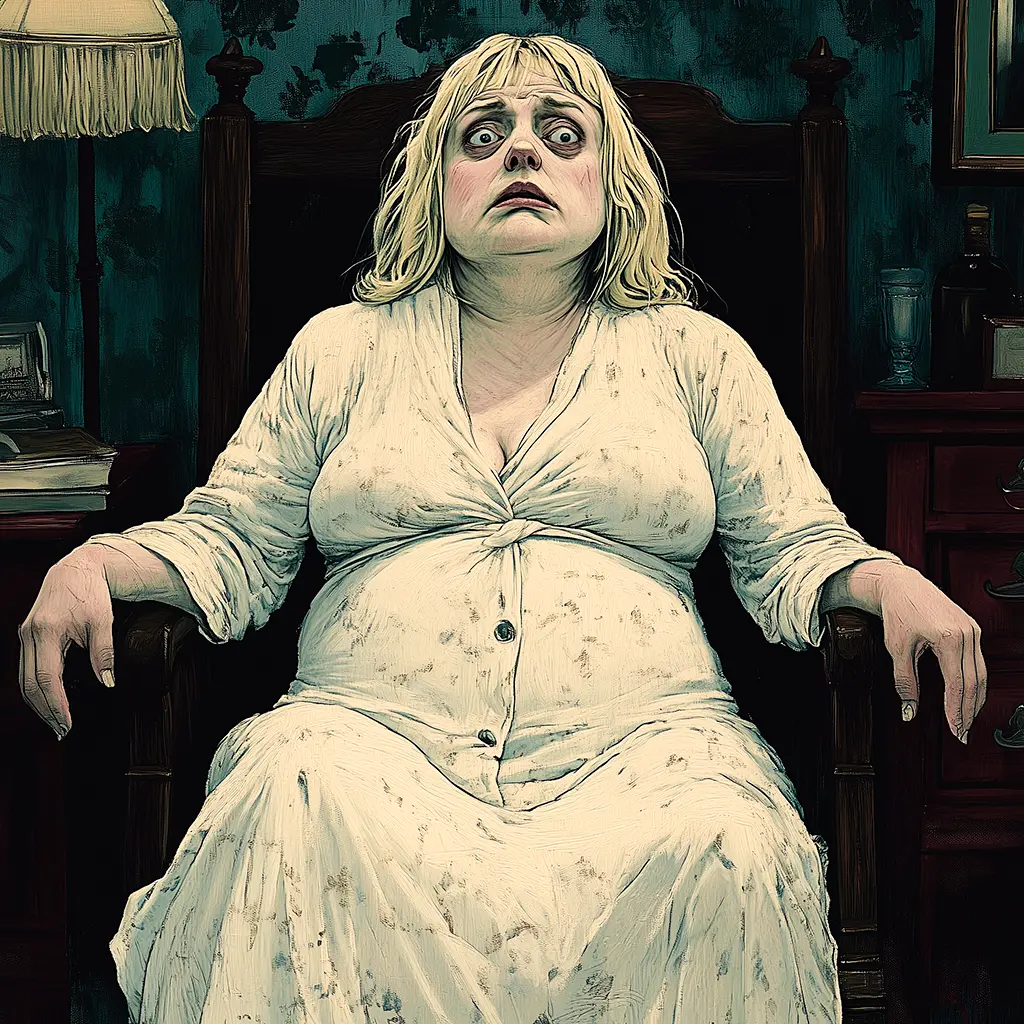
Synopsis: “Ali” is a short story by Ecuadorian writer María Fernanda Ampuero, published in 2018 in the book Pelea de gallos. It tells the story of Ali, a kind-hearted woman who, unlike other women in her social circle, is unusually generous and attentive to those who work in her home. However, as time goes by, her behavior begins to change in a disturbing way. Through the collective voice of the workers, the story shows domestic life from the inside and gives a glimpse of how, in that everyday space, tensions and memories accumulate, destabilizing the apparent normality of the home.
Ali
María Fernanda Ampuero
(Full story)
Miss Ali was strange, strange even in her generosity. She didn’t give us, for example, expired food or hand-me-down clothes. She gave us the good stuff. The very same things she ate or wore. I mean, her clothes were too big for us, but she always sent them to the tailor beforehand. And whenever she took a trip, she brought us new clothes, purses, makeup, gifts, as if we were her relatives and not her maids. Miss Ali was just like that. When she made up the grocery list, she asked us what we wanted because, as she told us, there might be something we didn’t like, something that didn’t agree with us, right? We’d never thought of that. The lady of the house usually ordered whatever she liked, and we had to eat it—that was that. Or, for example, when we went to the supermarket, she gave us her wallet. Just like that: her wallet, in our hands. So she was strange, but good strange. Oh, Miss Ali, you really are good, we’d tell her. Other girls said that the ladies they worked for would give them overripe fruit, suspicious-looking meat, black avocados that were only good for hair, or shoes with a split heel, pants with a rip in the crotch, lotions that had started to separate. Just crap. All the same: Thank you, miss, yes, very pretty, very delicious, miss. And the ladies checked their purses and bags when they left and sometimes even looked under their skirts in case they’d hidden some food in their underwear. And they were told: If you weren’t such thieves, we wouldn’t have to act like the police on top of everything else we have to do. The ladies said this as they groped the girls or patted their legs over their pants or had them empty their purses onto the floor.
And the other girls said jealously: So, the fat lady is really nice, huh? The fat ones are always better. I hope I find one. These skinny bitches are so miserable. And they’re mean. All they think about is how to get skinnier, and they take pills: Marlene, where are my pills? I’ll bring them to you, miss. What’s in those pills? She walks around like a crazy person, her eyes bugged out, looking like an owl. Ugh, mine, sometimes when she has an event coming up, she’ll go for days on just cheese and mineral water, and if you say good morning, miss—or even if you don’t say it—she’ll tear your eyes out! Mine throws up: she orders a large pizza, some chocolate, potato chips, she shuts her door, eats every last bite, and then I hear her throwing up again and again. Poor Karina, the girl who cleans, she’s the one who has to wipe it all up—and no thank you, no nothing. No, but they do pay us, don’t they? The minimum, sure, but they pay us. Those ladies’ grandparents didn’t even pay their girls; they were their owners, so to speak. They were taken from the fields—their own mothers gave them away—and were given a bed and food, and, in return, they said: Thank you, master, may our sweet Lord and Savior bless you and grant you a long life. Sonia worked for one woman who drank and took pills and slept all day, and when she woke up, she’d be furious and smack Sonia silly if she tried to keep her from hitting the kids. When she fired her, oh, how Sonia cried, because Sonia adored those children, and those little ones cried: Don’t go, Sonita, don’t leave us here all alone, Sonita. And the baby bawled like it was his own mother leaving him—so painful, because Sonia had raised that little boy. Yes, that happened right near here, in the neighboring town with the lake. Somehow her husband had a big important government job, with the mayor. And when the woman was with her friends, everything was all perfect, divine, like a dream. Their little laughs, right? Covering their mouths. Those faces they make: so fake, full of that shit they inject themselves with that makes them look all surprised, more like plastic dolls than women, their eyes all open wide, their lips like frogs. They’re all swollen, so ugly, they look like they’ve been cursed, but they pay a pretty penny to look like that. For parties, they hire whitegloved waiters so they won’t get their dark hands all over the white china or the tablecloths that cost more than we earn in a year. And they fill the tables with that pastel-colored raw fish. And they put flowers all over the house. And they bathe in perfume. Must be to hide the smell of vomit. The smell of dirty pajamas and sheets, covered in shit, period blood, farts, from when they don’t get up for days on end. No one sees them like that, when you have to go in and whisper, miss? It’s mister on the phone, he wants to know if you’re up yet. Tell him yes, that I’m in the bathroom. Don’t let anyone bother me, Mireya, go with the driver to pick up the children and feed them, and for the love of god, don’t let them in here, you understand? And the kids don’t even ask for their mom. They did at first, but then they started heading straight to the kitchen on their own. And there they tell you about their day, their soccer game, their tests, their friends, the good and the bad, the things they have in their heads and in their hearts, and you tell them things too, and in the end they’re like your own children. They grow up right there in the kitchen: eating with you until they get big, and then it seems weird to them to love you so much, even though deep down they know that you were their mother, and they see you one day in the future, once you’ve left, and they don’t know whether to cry or run into your arms like when they were little and fell down, or to just nod their heads at you because they’re now little ladies and little gentlemen of society who know you don’t greet the help with hugs and kisses.
The fat lady was a good mother, then?
Yes, Miss Ali was an excellent mother almost to the very end. Then she got her wires crossed and couldn’t do it anymore, not anymore. She couldn’t even have Mati near her, she couldn’t touch him at all. We couldn’t believe it, a little thing like that, like baby Jesus, with those golden curls and that little round face, an angel, running to hug her, and Miss Ali with that strange voice, too high, like someone had stepped on a rat, would shout for us to come. As if she were in mortal danger. Of the poor little creature. Her baby. Alicita was already bigger and that girl was always real smart, sharp as a tack. With those big blue eyes that so clearly understood everything. Inhuman, that girl’s eyes, like she could see everything inside your head. She must’ve seen something ugly in her mother because she knew right away. At first sight. She refused to go into whatever room her mother happened to be in. She stopped thinking that she even had a mother: she already saw herself as an orphan, playing by herself and caring for her little brother. It just made your heart break to look at her, so somber, dressing him or telling him to stop crying over silly things, to grow up. And the husband, well, the young man did the best he could with his fat, crazy wife. He went off to work like all the men in the city: at eight o’clock sharp, all in their four-wheel-drive SUVs, all with their shirts and pants ironed by us. And his face, so sad you could die. He already felt like a widower, with his little kids and their insane mother. Once her fits started, her madness, Miss Ali slept in the guest room, and she asked us to bring food to her in bed. She hardly saw her husband anymore. When they did run into each other at home, she told him to go away, and when he tried to hug her, she didn’t let him: she let out her shriek like a trampled rat and went back into the guest room, and he stood outside, doing nothing for a long while, sometimes with his hand on the doorknob. The young man made us so sad. All of them made us sad, really. Miss Ali smelled bad, poor thing. Mati didn’t sleep well at night. Alicita hardly talked. And the husband, we don’t know, he worked until late and just said thank you, thank you.
Whenever Doña Teresa, Miss Ali’s mom, came over, things got even worse. She made her bathe, cut her nails, shave, wash all her clothes, air out her room. You could hear the screaming across town. Doña Teresa’s driver always came in to help get Miss Ali out of bed, and that man’s presence set her off like he was the devil himself. We all ended up scratched and bitten and crying because when Miss Ali saw that man, she freaked out: she turned into a scared bull, two hundred pounds of fury. We practically had to tie her up to get her to the bathroom. When the driver left, Miss Ali seemed to calm down a little, and since we understood it, we didn’t know how the mother, Doña Teresa, didn’t, how she kept bringing the man with her. We’d banned the driver and the gardener and the window washer and the boy who brought the groceries and Alicita’s swimming instructor and any other worker from entering the house when Miss Ali was awake because we’d already seen what happened with men. At first, we would ask her: Miss Ali, what’s wrong? What’s wrong? What happened? When she started having her fits, she sometimes forgot her own name, and she would say, Close the door, lock it, don’t sleep with the door unlocked, lock my daughter up, lock her up tight, don’t give anyone my daughter’s key, lock her up. And she’d check the lock on her bedroom door a hundred times. But her mother didn’t ask. May God forgive us, but that lady seemed blind, heartless. She didn’t even talk to Miss Ali. She only came because of her leg, and she only asked about her leg, but any idiot could see that her knee was the least of the girl’s problems, that silly slip by the pool and the bottles and bottles of painkillers they started giving her, some prescribed by the doctor and others not officially prescribed. In the kitchen, we started talking about looking for other doctors, head doctors, for real lunatics, but who would listen to us girls? Miss Ali was no longer the same person, and every day she became less like herself. It seemed like we were the only ones who saw it. It wasn’t her leg—why did they keep talking about her leg? Why did they go on and on about the leg, the leg, the leg? Her leg got better, but she, who was she? She was the kind of mom who would watch movies and eat pizza with her kids in bed. They would all draw pictures, sculpt clay, make up their own skits, play dress up. She’d even take us all out for hamburgers. She used to take care of the plants, to eat colorful cereal for breakfast like her kids, to watch Mati sleeping and then say to us, Can you believe I made something so beautiful? She wasn’t the woman who ran away from her husband and kids, monstrously fat, stinking, locking and unlocking her door forty times a day. No, that wasn’t our Miss Ali. One day, her father, Don Ricardo, came without warning. We let him in, he asked where his daughter was, and we told him she was in the guest room. We were in the kitchen making the coffee he’d asked for when we heard the front door slam shut. We ran to Miss Ali’s room, and there she was: her eyes big as saucers, one hand gripping the sheet under her chin, and the other brandishing a pair of nail scissors. She was pointing the scissors at the door, her arm shaking all the way up to her shoulder. Miss? She started to scream. Make him leave, make him leave, make him leave! Who?Your dad? He already left, pretty girl. Make him go. Lock the door, please, don’t let him back in. Lock all the doors, don’t let him near the girls, don’t let him near Alicita, I see him, I see him, and I hear him and I know. What do you know, miss? What do you see? She started to scream that she hurt. What hurts, sweetie? Where? The scissors were still pointing toward the door. But then she did it, fast: she gripped the scissors and she sliced down from her hairline to her jaw. We’d never seen so much blood. Our lady’s face cut open like raw beef. Vinicio, Don Ricardo’s driver, heard the screams from outside. We put her in the car and took her to the hospital. On the way, we called the husband. Oh, that young man. We waited for news at the house, with the kids. Alicita didn’t ask any questions about her mother. We told her she’d had an accident, and she didn’t even look at us. Miss Ali came home looking even worse. The bandages on her face looked horrible. She wanted to see for herself and tried to take them off all the time, so they put bandages on her hands too, and took away all the mirrors. We heard from her mother’s friends that the doctors said it wasn’t good for her to see herself yet, that she had to undergo some treatments first, plastic surgery, because the wound was very ugly, very purple, that she had an infection and it went down her whole face, from her forehead to her neck, that it was a miracle she hadn’t lost an eye. We also heard that it had been an accident. That she hadn’t known what she was doing. That she had been half-asleep, that she had always been a sleepwalker, since she was a little girl, a sleepwalker! No one asked us what happened, because if anyone had asked, we would have told them that she took the scissors and stabbed them into her skin and dragged them down like she wanted to destroy her face, that she was alert, lucid, that her father had just been in her room and that she was terrified of him, that she asked us to keep the girl away from him, and that he was the one she actually wanted to stab with the scissors. But everyone talked instead about sleepwalking, and us girls’ opinions didn’t matter, so we went about feeding Miss Ali through a straw and fluffing her pillows and making sure she was comfortable and calm. We took care of the children and the young man, who was like a lost soul. We watered the plants for Miss Ali, we cuddled little Alicita, her heart a little colder every day, we answered the telephone and said, Yes, miss, okay, no, she’s asleep right now, yes, Doña Teresa, she’s better today, yes, she had carrot puree for lunch, yes, sir, yes, don’t worry, we’re here, it’s nothing, goodbye, yes, miss, I’ll give her the message. When the mother, Doña Teresa, came, Miss Ali turned to face the wall, and she sometimes stayed that way the entire afternoon. The woman brought her friends with her to keep from getting bored, even though it was clear that her daughter didn’t like people to come: she hid her head under the sheets and stayed there, like she was wearing a shroud. We were constantly serving coffee, glasses of water, diet sodas, and cookies; we had to order desserts from the café in the mall. Doña Teresa’s friends might have thought they were being nice by visiting Miss Ali and yakking and gossiping about everyone, but we went in sometimes and we saw her there, immobile, miserable, like a chained animal, and sometimes she had streaks of tears where the bandages didn’t cover her face. When all those ladies left, what a relief, we had to air out the whole house from all the hair spray and perfume. We were like tadpoles trying to breathe, opening and closing our mouths. Finally the house emptied itself of a thick liquid, as if it were a fish tank with strange fish in it: all painted nails and styled hair and gold accessories. They left. We went back to being like before. Miss Ali came out from under the sheets and asked for the dessert they’d left behind. We laughed and ate the desserts, and we had our Miss Ali back for a minute until she grabbed our hands and said, terrified: Does the lock on the door work? And to Alicita’s room? And we said yes, of course they worked, and we patted her greasy hair, and she asked us to take care of her, and she fell asleep until her first nightmare came. In her nightmares they were trying to undress her. In her nightmares someone made her do things she didn’t want to do. In her nightmares she locked all the doors. In her nightmares there was always an adult with a set of keys.
Around that time, the young man took the children to his mother’s because something happened with Miss Ali and Alicita. The truth is, we still believe she wouldn’t have done anything bad, that she just wanted to help her daughter, to teach her, but the young man walked in when Miss Ali was in the bath with her naked little daughter and that plastic thing that was like a big cock, and the man went crazy, he shouted at her and hit her, he called her a crazy bitch, what are you doing, you fat crazy bitch, you stupid filthy bitch, I’m going to lock you away, and she just cried. That’s what the girls from next door said they heard, because we weren’t there. It was Sunday. So the young man took the kids in their pajamas, in the middle of the night, to his mother’s house. After that, Miss Ali couldn’t even lift her head. Doña Teresa came to stay, and Miss Ali didn’t say a word around her. When we were alone, she sometimes opened her eyes and asked about Alicita. We told her she was fine and she asked to see her. Then she’d start to cry and the mother would send us to get her pills. A doctor friend of Doña Teresa’s had given her some pills that left her drooling and staring off into space. We thought it would be better for her to cry because it seemed like Miss Ali had a lot to cry over, a lifetime’s worth, but the mother gave her those pills like they were candy. All the time. It made us sad to see her like that, turned into such a monster. That scar crisscrossing her face like a purple worm, her tremendous size, her drool, her lost eyes, the white bathrobes that her mother had brought from the United States so she’d always look clean. Days passed. And months. Christmas came. Yes, that was the worst part: Christmas. Miss Ali seemed a little better, she stood up, went down to the kitchen, had cereal for breakfast, and told us that she wanted to buy Christmas presents, so we imagined she wanted to get her kids back, her husband. We were so happy, and we left her alone for a little while to get dressed to go to the mall. When we returned, she had gone into the bathroom and locked the door. We heard a lot of water running, for too long. Miss Ali? We knocked on the door. Miss? We went to find the keys, and when we got back, there she was, wrapped in a towel, her hair soaked, long and straight, stuck to her back. She smiled at us. What’s wrong?
The mall was a madhouse: Christmas carolers, screaming children, and hundreds of people. We were worried—Miss Ali hadn’t been out of the house in months—but besides a slight limp and her weight, no one would’ve known there was anything strange about the woman, that she had been through what she’d been through. That’s the way it is, isn’t it? You see people, and you have no idea what goes on inside the walls of their home. Almost immediately, she looked at us and said she had to buy some important gifts for some important people, and that those people couldn’t see those gifts, so we had to separate for a little while. Everything seemed to be going well. She winked and smiled at us, walked off with her purse, in her tracksuit, her red running shoes. She looked like a normal girl, the same Miss Ali as always, who was going up to the fifth floor to buy us who knew what. We watched her go up the elevator—Christmas music was playing, and it seemed like she was her old self again, that she was going to be a mother to her children and a wife to her husband, and we thought that it was a miracle from Baby Jesus because we had prayed so much and they say that God actually listens to poor people because he loves them more, so the misery of poverty had to be good for something, to help us get Miss Ali back, to end her nightmare and everyone else’s. We saw her peek over the balcony of the fifth-floor café, and then we knew, immediately we knew—there’s something that tells you, something unexplainable—that something terrible was about to happen. Several simultaneous screams, then the sound of a body being annihilated, like a sack of glass, stone, and raw flesh, one side of Miss Ali’s skull smashed, melted, and more screaming, a scream that comes from inside you, a scream like a stab, a scream from the heart and lungs and stomach, and Miss Ali lying there, like a huge doll with her legs splayed, an inhuman position, like she was filled with stuffing instead of bones. We stood there, frozen, our hands over our mouths, until the doctors came, the police, the husband, Doña Teresa, Don Ricardo, and someone started shaking us, telling us to go home and take care of all the people who immediately started to arrive, desperate to know why, how, and Doña Teresa, clutching a handkerchief, said accident, terrible accident, wet floor, she was unstable, you know, her knee, but she insisted on going to the mall because she was a wonderful mother, of course, of course, her friends said, and she wanted to buy Christmas presents for the kids. What a nightmare, yes, an accident, our poor, sweet girl, the friends said. But when the lady left the room, one of them took out her phone and read the news about the “Shopping Mall Suicide” while the others listened, their ring-covered hands over their mouths, their eyes wide, unblinking. Another lady said quietly that she’d heard strange things about the family, things between the brother and the sister, between the father and the daughter. The others angrily shut her up: Don’t repeat stupid things.
At the burial, a woman at the cemetery handed out white roses so that Miss Ali’s loved ones could place them on her coffin. When she walked by, she skipped us and gave roses to some very elegant ladies wearing big black sunglasses who we’d never seen before. The day after the burial, Don Ricardo gave us each a hundred dollars, for the days we worked that month, he told us, and before we left, Doña Teresa checked our purses and bags in case we had stolen anything. There, where she didn’t check us, we had Miss Ali’s wedding ring, her pretty watch, and a pearl necklace she’d never worn. Doña Teresa didn’t say goodbye, nor thank you. Behind her, Alicita watched us with those huge, intelligent, frightened blue eyes. The exact same eyes as her mother.
THE END