Horacio Quiroga: The Son. Summary and analysis

Horacio Quiroga: The Son. Summary and analysis

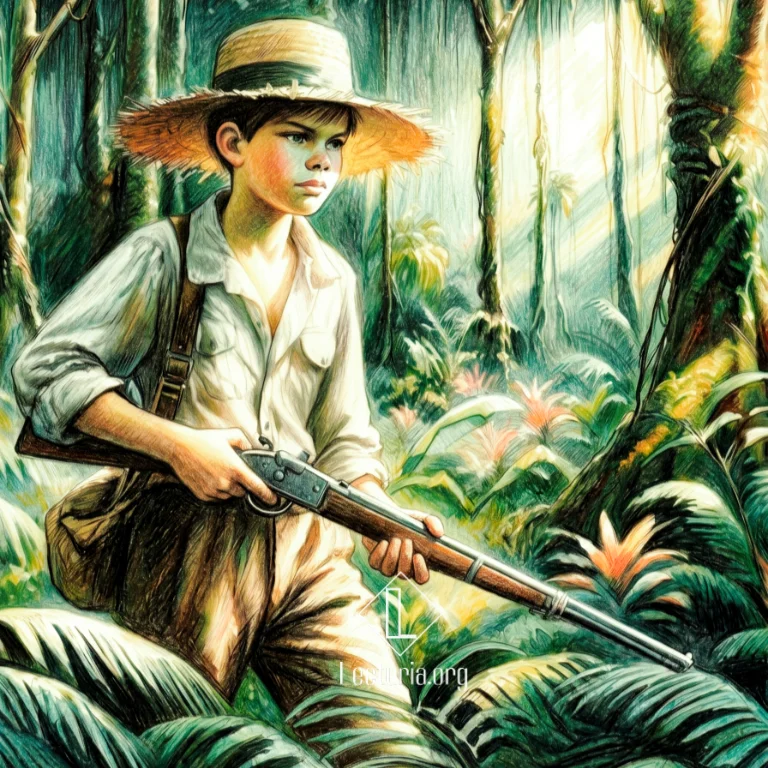
On a sweltering summer day in the Misiones jungle, as on so many other mornings, a widowed father allows his thirteen-year-old son to go hunting in the bush. The boy knows the terrain, handles his shotgun skillfully, and has been taught from early childhood to move independently among the dangers of the forest. Trusting in that training, the father returns to his workshop beneath the full blaze of the midday sun, certain that his son will come back at the appointed hour. Meanwhile, he tenderly recalls the boy’s passion for hunting, remembers his own childhood, and reflects on the way he has raised this child who is his entire reason for living.

Julio Ramón Ribeyro: The Beach House. Summary and Literary Analysis

Julio Ramón Ribeyro: The Beach House. Summary and Literary Analysis

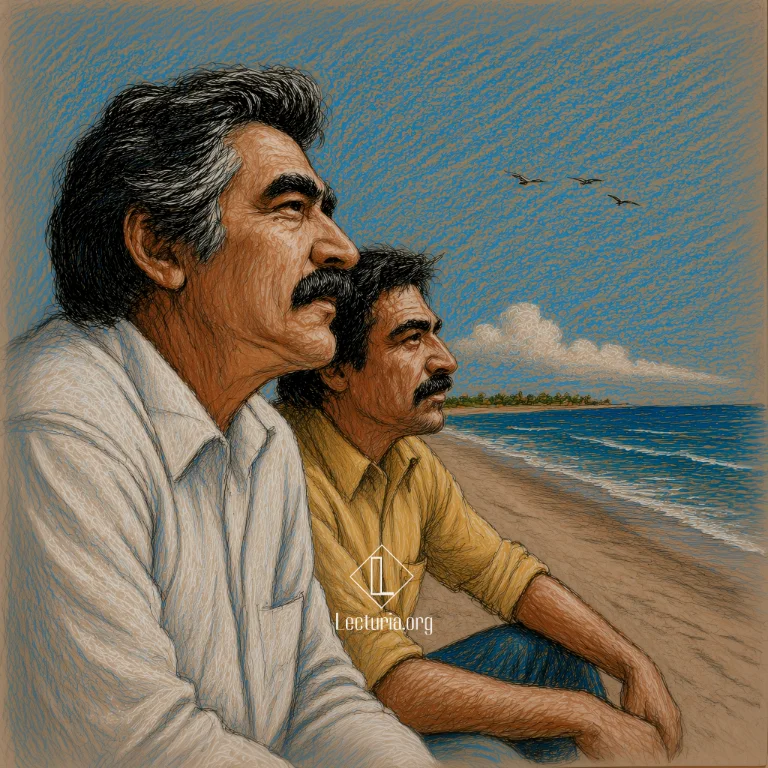
Two Peruvian friends nearing their fifties, who have lived in Europe since they were young, meet one summer in Lima and decide to carry out a long-shared project: to find a completely deserted beach on the Peruvian coast and build a house there to retreat from the noise of the world. Ernesto, a painter, and the narrator, a writer, feel what they call “the call of the desert” and set out, summer after summer, on a series of expeditions to the south of the country. On each outing they encounter splendid landscapes and unexpected obstacles: coves already occupied by fishermen, locals who eye them with suspicion, sandstorms, breakdowns in the middle of the desert, friends who lead them off course, and even a ten-liter jug of pisco that changes the direction of one trip. Each failure, however, seems to make them more stubborn in their search for their imagined refuge.

Gustavo Adolfo Bécquer: The Miserere. Summary and Literary Analysis

Gustavo Adolfo Bécquer: The Miserere. Summary and Literary Analysis

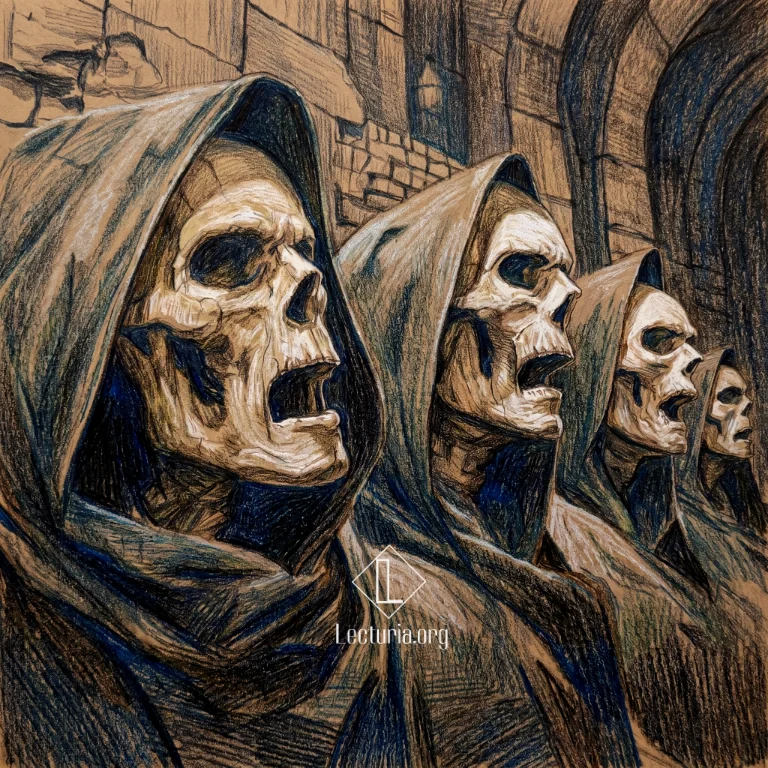
In the abandoned library of the Fitero Abbey, a visitor discovers among the dust an old music notebook: an unfinished Miserere, covered with strange annotations in German that seem written by a madman and that speak of creaking bones and howling strings. Intrigued by the find, he asks an old man from the area for an explanation, who recounts an ancient legend. Years earlier, on a stormy night, a pilgrim musician arrived at the abbey, tormented by a guilt from his youth, determined to compose a song of repentance so sublime that it would earn him divine forgiveness. When one of the shepherds gathered around the fire tells him of the Miserere of the Mountain—a supernatural music that, according to the tale, is heard every Holy Thursday in the ruins of a monastery burned down centuries ago—the pilgrim decides to venture that very night into the crags to hear it.

Ray Bradbury: Jack-in-the-Box. Summary and Analysis

Ray Bradbury: Jack-in-the-Box. Summary and Analysis

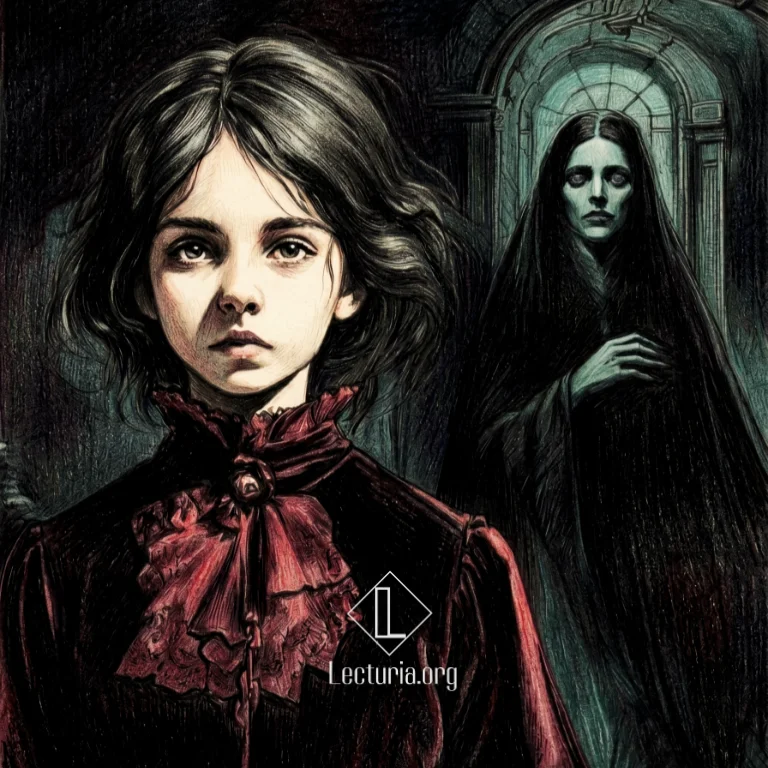
Edwin is a thirteen-year-old boy who has spent his entire life confined within a vast mansion. His mother has taught him that the outside world is inhabited by deadly “Beasts” that killed his father, and that leaving the house is tantamount to dying. The house functions as a complete universe divided into territories Edwin crosses daily to attend school, where he is taught by a mysterious teacher who wears a hooded robe and glasses, so that her face cannot be seen. One day, Edwin discovers an open door that leads to a tower from which he sees the outside world for the first time. Shortly afterward, after celebrating his birthday, he finds his mother unconscious in the Parlor. He looks for his teacher, but all he finds is her robe, her glasses, and her makeup. With no one to stop him, Edwin goes through the garden, crosses the iron gate, and steps into the real world, shouting with joy that he is dead—since that is the only word he knows to describe the outside.

Isaac Asimov: The Dead Past. Summary

Isaac Asimov: The Dead Past. Summary

In a future where scientific research is controlled by the government, Professor of History Arnold Potterley seeks access to the chronoscope, a device that allows images of the past to be viewed, in order to study ancient Carthage, but his request is denied. Frustrated, he persuades the young physicist Jonas Foster to investigate Neutrinics, the scientific basis of chronoscopy. Foster discovers a more efficient method for building chronoscopes and constructs one, but reveals that it can observe only up to one hundred and twenty-five years into the past. When Potterley’s wife wishes to use the device to see her deceased daughter, Potterley destroys it. He then informs on Foster to the authorities in order to prevent the dissemination of the discovery; however, Foster’s uncle has already sent the plans to multiple publishers. The head of Chronoscopy then reveals the devastating truth: the chronoscope can observe not only the dead past but also the immediate present, so its widespread use would mean the absolute end of human privacy.

Roberto Bolaño: The Insufferable Gaucho. Summary and Analysis

Roberto Bolaño: The Insufferable Gaucho. Summary and Analysis

“The Insufferable Gaucho” (El gaucho insufrible) is a short story by Roberto Bolaño, published in 2003. After losing his wife and seeing his children leave, the lawyer Manuel Pereda lives an orderly life in Buenos Aires until, faced with the economic crisis of the early twenty-first century, he decides to abandon the city and retire to the old family ranch on the Pampas. In a decaying rural environment overrun by rabbits, he tries to rebuild his life, surrounded by impoverished gauchos, malnourished children, and eccentric characters. Over time, he repairs the estate, establishes relationships with the local inhabitants, and keeps up a correspondence with his former housemaids. He is visited by his son, a successful writer, and other people from Buenos Aires, but remains in his retreat. Eventually, he returns briefly to the city to sign the sale of his apartment. After an altercation with a writer in a café, and feeling out of place in a city he no longer recognizes, he decides to go back to the Pampas.