Isaac Asimov: The Feeling of Power

Isaac Asimov: The Feeling of Power

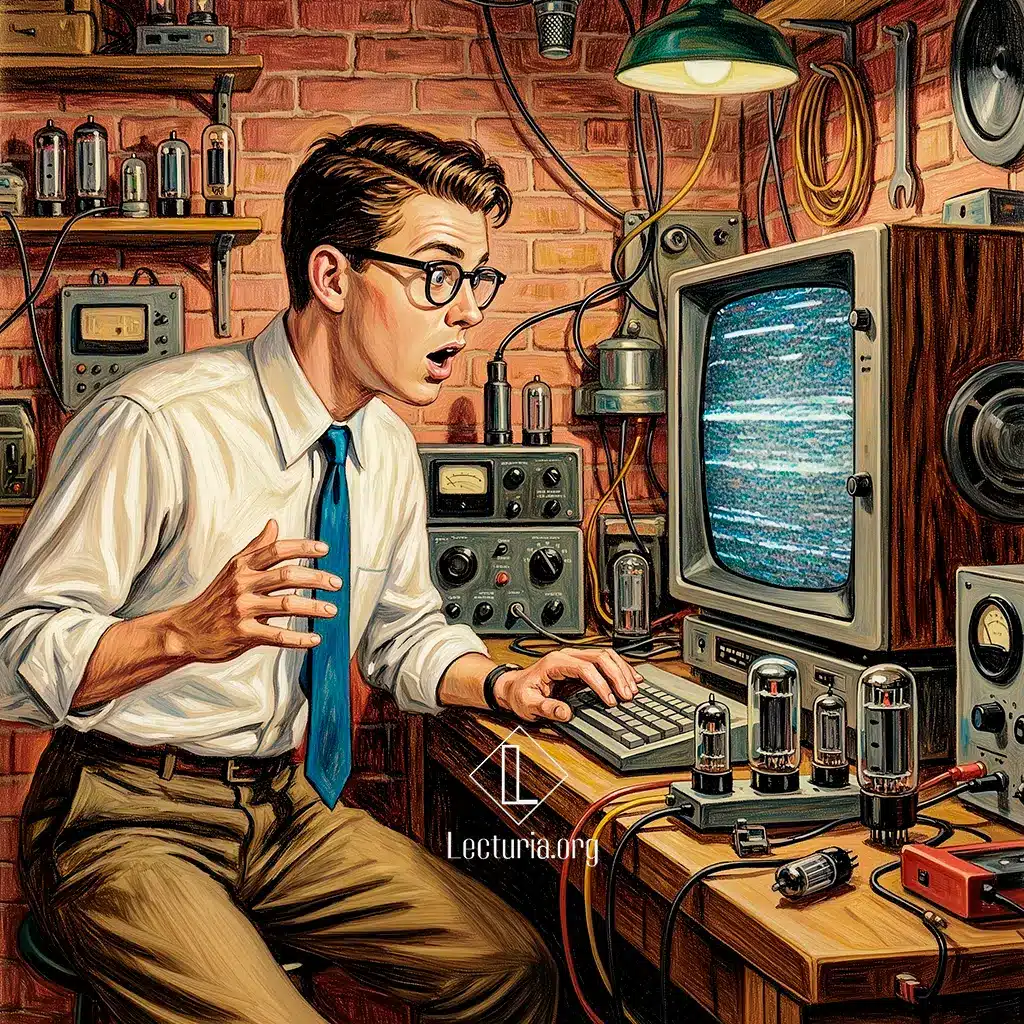
“The Feeling of Power” is a short story by the American writer Isaac Asimov, published in February 1958 in If magazine and later included in 1959 in the book Nine Tomorrows. In a future dominated by technology, humanity depends on computers and has forgotten even the most elementary mathematical operations. In the midst of a long war against Deneb, programmer Jehan Shuman summons military and political leaders to introduce them to Myron Aub, a humble technician with an unusual talent: he has developed a method that allows him to perform arithmetic calculations using only his mind, a pencil, and a sheet of paper. Intrigued and skeptical, the high-ranking officials witness a demonstration that could change the course of the conflict.

Isaac Asimov: I’m in Marsport Without Hilda

Isaac Asimov: I’m in Marsport Without Hilda

“I’m in Marsport Without Hilda” is a short story by American writer Isaac Asimov, published in November 1957 in Venture Science Fiction Magazine. Max, an agent of the Galactic Service, arrives in Marsport for a three-day stopover before returning to Earth. The occasion seems perfect: his wife, Hilda, will not be able to join him, leaving him free to call Flora, a former lover. But just when everything seems to be leading toward the long-awaited encounter, Rog Crinton, an official of the Service on Mars, assigns him an urgent mission: to discover which one of three important passengers is carrying a dangerous contraband substance capable of threatening space travel.
Isaac Asimov: Someday

Isaac Asimov: Someday

“Someday” is a short story by Isaac Asimov published in August 1956 in the magazine Infinity Science Fiction. Set in a future in which machines have replaced much of everyday work, the story follows Niccolo and Paul, two friends who discover an old Narrator, a device that automatically creates and tells stories. The two friends complain that the machine only tells stories set in a world with horses, cows, and other things they do not recognize. While Paul tries to improve the device, he tells Niccolo that there was once a time—before computers—when people had to do something called “reading” in order to learn new stories.

Isaac Asimov: The Fun They Had

Isaac Asimov: The Fun They Had

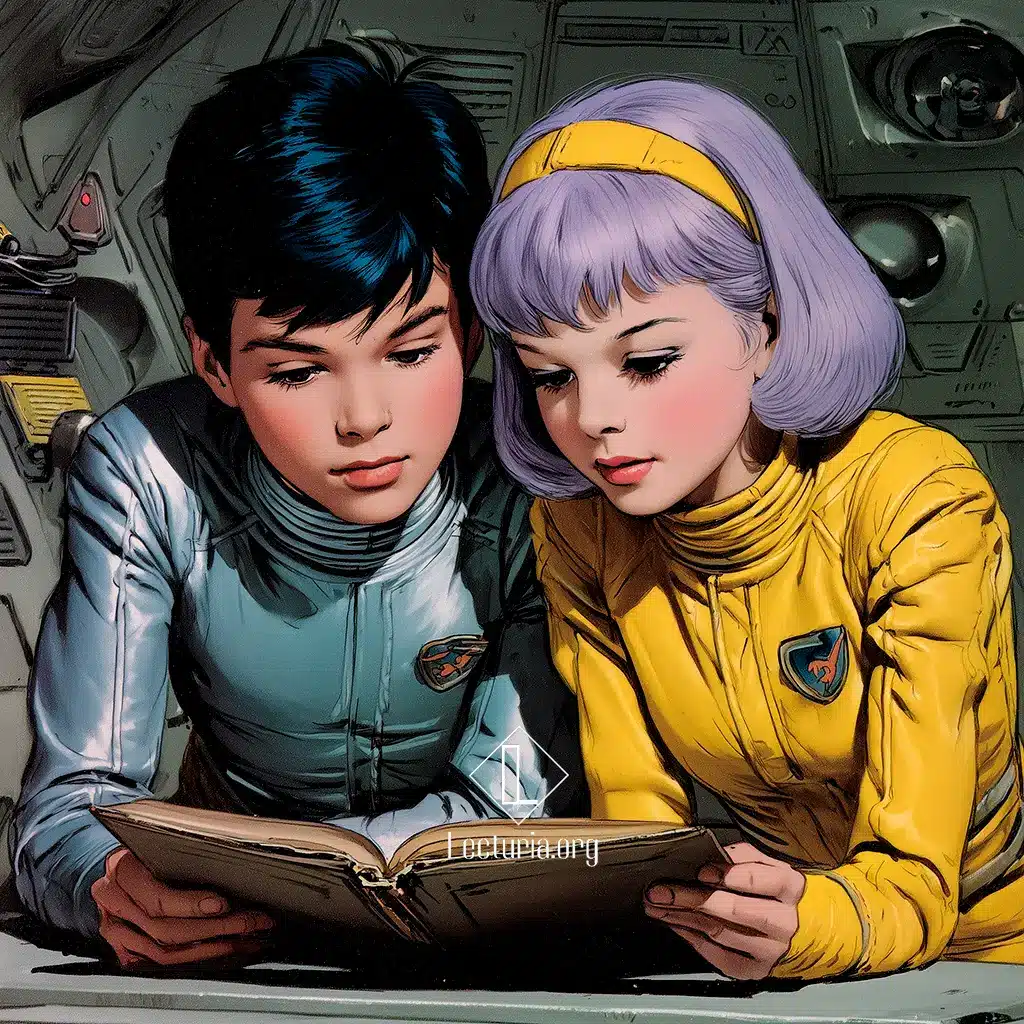
“The Fun They Had” is a short story by Isaac Asimov, published in December 1951 in Boys and Girls Page. Margie and Tommy, two children living in a future society, discover something they have never seen before: a real book printed on paper. The two friends—and Margie in particular—are fascinated by this unusual object, which describes a distant time when education was conducted in a way very different from the one they know.

Isaac Asimov: The Dead Past. Summary

Isaac Asimov: The Dead Past. Summary

In a future where scientific research is controlled by the government, Professor of History Arnold Potterley seeks access to the chronoscope, a device that allows images of the past to be viewed, in order to study ancient Carthage, but his request is denied. Frustrated, he persuades the young physicist Jonas Foster to investigate Neutrinics, the scientific basis of chronoscopy. Foster discovers a more efficient method for building chronoscopes and constructs one, but reveals that it can observe only up to one hundred and twenty-five years into the past. When Potterley’s wife wishes to use the device to see her deceased daughter, Potterley destroys it. He then informs on Foster to the authorities in order to prevent the dissemination of the discovery; however, Foster’s uncle has already sent the plans to multiple publishers. The head of Chronoscopy then reveals the devastating truth: the chronoscope can observe not only the dead past but also the immediate present, so its widespread use would mean the absolute end of human privacy.

Isaac Asimov: First Law

Isaac Asimov: First Law

“First Law” is a short story by Isaac Asimov published in October 1956 in Fantastic Universe magazine. The story follows Mike Donovan, a veteran robotics engineer, who recounts an unusual situation that occurred on Titan, one of Saturn’s moons. There, during a mining mission, an experimental robot model from the MA series exhibits unexpected behavior that seems to contradict the First Law of Robotics: “A robot may not injure a human being or, through inaction, allow a human being to come to harm.” The story presents an intriguing situation that challenges the fundamental principles of artificial intelligence.