Synopsis: “A Small Kindness” is a short story by American writer Ben Bova, published in April 1983 in Analog Science Fiction/Science Fact magazine. Jeremy Keating is a U.S. diplomatic agent sent to Athens on a mission to assassinate Kabete Rungawa, a venerable African leader known as “The Black Saint of the Third World,” a key figure in the newly created World Government. Determined to carry out his mission, on a rainy night he follows his target through the city streets to the ruins of the ancient Acropolis. However, what appears to be a routine political assassination soon turns into an encounter that will shake Keating’s certainties about the world, his enemies, and his own reasons for killing.
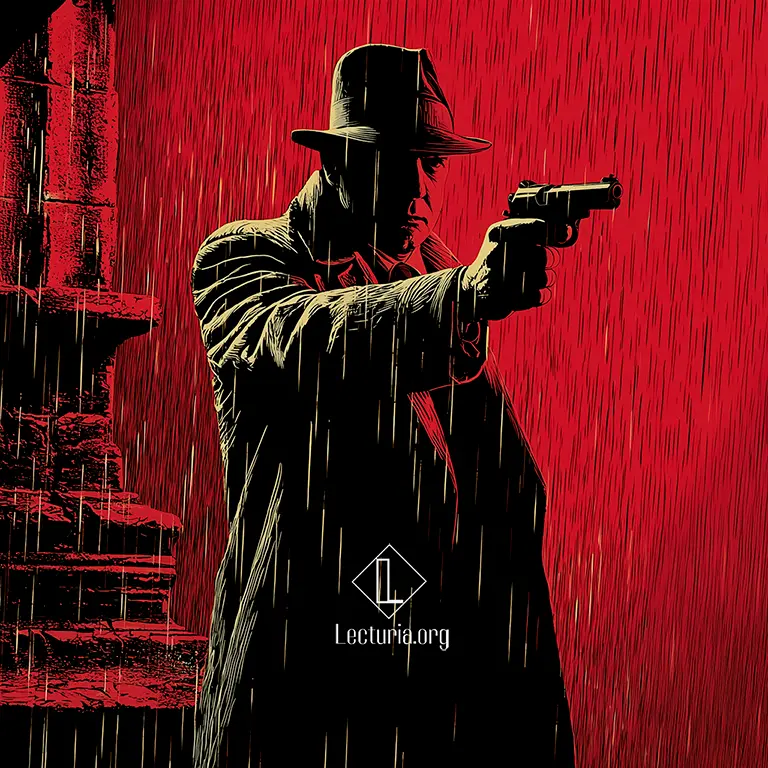
A Small Kindness
Ben Bova
(Full story)
Jeremy Keating hated the rain. Athens was a dismal enough assignment, but in the windswept rainy night it was cold and black and dangerous.
Everyone pictures Athens in the sunshine, he thought. The Acropolis, the gleaming ancient temples. They don’t see the filthy modern city with its endless streams of automobiles spewing out so much pollution that the marble statues are being eaten away and the ancient monuments are in danger of crumbling.
Huddled inside his trenchcoat, Keating stood in the shadows of a deep doorway across the street from the taverna where his target was eating a relaxed and leisurely dinner—his last, if things went the way Keating planned.
He stood as far back in the doorway as he could, pressed against the cold stones of the building, both to remain unseen in the shadows and to keep the cold rain off himself. Rain or no, the automobile traffic still clogged Filellinon Boulevard, cars inching by bumper to bumper, honking their horns, squealing on the slickened paving. The worst traffic in the world, night and day. A million and a half Greeks, all in cars, all the time. They drove the way they lived—argumentatively.
The man dining across the boulevard in the warm, brightly-lit taverna was Kabete Rungawa, of the Tanzanian delegation to the World Government conference. “The Black Saint of the Third World,” he was called. The most revered man since Gandhi. Keating smiled grimly to himself. According to his acquaintances in the Vatican, a man had to be dead before he could be proclaimed a saint.
Keating was a tall man, an inch over six feet. He had the lean, graceful body of a trained athlete, and it had taken him years of constant painful work to acquire it. The earlier part of his adult life he had spent behind a desk or at embassy parties, like so many other Foreign Service career officers. But that had been a lifetime ago, when he was a minor cog in the Department of State’s global machine. When he was a husband and father.
His wife had been killed in the rioting in Tunis, part of the carefully-orchestrated Third World upheaval that had forced the new World Government down the throats of the white, industrialized nations. His son had died of typhus in the besieged embassy, when they were unable to get medical supplies because the U. S. government could not decide whether it should negotiate with the radicals or send in the Marines.
In the end, they negotiated. But by then it was too late. So now Keating served as a roving attaché to U.S. embassies or consulates, serving where his special talents were needed. He had found those talents in the depths of his agony, his despair, his hatred.
Outwardly he was still a minor diplomatic functionary, an interesting dinner companion, a quietly handsome man with brooding eyes who seemed both unattached and unavailable. That made him a magnetic lure for a certain type of woman, a challenge they could not resist. A few of them had gotten close enough to him to trace the hairline scar across his abdomen, all that remained of the surgery he had needed after his first assignment, in Indonesia. After that particular horror, he had never been surprised or injured again.
With an adamant shake of his head, Keating forced himself to concentrate on the job at hand. The damp cold was seeping into him. His feet were already soaked. The cars still crawled along the rainy boulevard, honking impatiently. The noise was making him irritable, jumpy.
“Terminate with extreme prejudice,” his boss had told him, that sunny afternoon in Virginia. “Do you understand what that means?”
Sitting in the deep leather chair in front of the section chief’s broad walnut desk, Keating nodded. “I may be new to this part of the department, but I’ve been around. It means to do to Rungawa what the Indonesians tried to do to me.”
No one ever used the words kill or assassinate in these cheerfully lit offices. The men behind the desks, in their pinstripe suits, dealt with computer printouts and satellite photographs and euphemisms. Messy, frightening things like blood were never mentioned here.
The section chief steepled his fingers and gave Keating a long, thoughtful stare. He was a distinguished-looking man with silver hair and smoothly tanned skin. He might be the board chairman you meet at the country club, or the type of well-bred gentry who spends the summer racing yachts.
“Any questions, Jeremy?”
Keating shifted slightly in his chair. “Why Rungawa?”
The section chief made a little smile. “Do you like having the World Government order us around, demand that we disband our armed forces, tax us until we’re as poor as the Third World?”
Keating felt emotions burst into flame inside his guts. All the pain of his wife’s death, of his son’s lingering agony, of his hatred for the gloating ignorant sadistic petty tyrants who had killed them—all erupted in a volcanic tide of lava within him. But he clamped down on his bodily responses, used every ounce of training and willpower at his command to force his voice to remain calm. One thing he had learned about this organization, and about this section chief in particular: never let anyone know where you are vulnerable.
“I’ve got no great admiration for the World Government,” he said.
The section chief’s basilisk smile vanished. There was no need to appear friendly to this man. He was an employee, a tool. Despite his attempt to hide his emotions, it was obvious that all Keating lived for was to avenge his wife and child; it would get him killed, eventually, but for now his thirst for vengeance was a valuable handle for manipulating the man.
“Rungawa is the key to everything,” the section chief said, leaning back in his tall swivel chair and rocking slightly.
Keating knew that the World Government, still less than five years old, was meeting in Athens to plan a global economic program. Rungawa would head the Tanzanian delegation.
“The World Government is taking special pains to destroy the United States,” the section chief said, as calmly as he might announce a tennis score. “Washington was forced to accept the World Government, and the people went along with the idea because they thought it would put an end to the threat of nuclear war. Well, it’s done that—at the cost of taxing our economy for every unemployed black, brown, and yellow man, woman, and child in the entire world.”
“And Rungawa?” Keating repeated.
The section chief leaned forward, pressed his palms on his desktop and lowered his voice. “We can’t back out of the World Government, for any number of reasons. But we can—with the aid of certain other Western nations—we can take control of it, if we’re able to break up the solid voting bloc of the Third World nations.”
“Would the Russians—”
“We can make an accommodation with the Russians,” the section chief said impatiently, waving one hand in the air. “Nobody wants to go back to the old cold-war confrontations. It’s the Third World that’s got to be brought to terms.”
“By eliminating Rungawa.”
“Exactly! He’s the glue that holds their bloc together. ‘The Black Saint.’ They practically worship him. Eliminate him and they’ll fall back into their old tangle of bickering selfish politicians, just as OPEC broke up once the oil glut started.”
It had all seemed so simple back there in that comfortable sunny office. Terminate Rungawa and then set about taking the leadership of the World Government. Fix up the damage done by the Third World’s jealous greed. Get the world’s economy back on the right track again.
But here in the rainy black night of Athens, Keating knew it was not that simple at all. His left hand gripped the dart gun in his trench coat pocket. There was enough poison in each dart to kill a man instantly and leave no trace for a coroner to find. The darts themselves dissolved on contact with the air within three minutes. The perfect murder weapon.
Squinting through the rain, Keating saw through the taverna’s big plate-glass window that Rungawa was getting up from his table, preparing to leave the restaurant.
Terminate Rungawa. That was his mission. Kill him and make it look as if he’d had a heart attack. It should be easy enough. One old man, walking alone down the boulevard to his hotel. “The Black Saint” never used bodyguards. He was old enough for a heart attack to be beyond suspicion.
But it was not going to be that easy, Keating saw. Rungawa came out of the taverna accompanied by three younger men. And he did not turn toward his hotel. Instead, he started walking down the boulevard in the opposite direction, toward the narrow tangled streets of the most ancient part of the city, walking toward the Acropolis. In the rain. Walking.
Frowning with puzzled aggravation, Keating stepped out of the doorway and into the pelting rain. It was icy cold. He pulled up his collar and tugged his hat down lower. He hated the rain. Maybe the old bastard will catch pneumonia and die naturally, he thought angrily.
As he started across the boulevard a car splashed by, horn bleating, soaking his trousers. Keating jumped back just in time to avoid being hit. The driver’s furious face, framed by the rain-streaked car window, glared at him as the auto swept past. Swearing methodically under his breath, Keating found another break in the traffic and sprinted across the boulevard, trying to avoid the puddles even though his feet were already wet through.
He stayed well behind Rungawa and his three companions, glad that they were walking instead of driving, miserable to be out in the chilling rain. As far as he could tell, all three of Rungawa’s companions were black, young enough and big enough to be bodyguards. That complicated matters. Had someone warned Rungawa? Was there a leak in the department’s operation?
With Keating trailing behind, the old man threaded the ancient winding streets that huddled around the jutting rock of the Acropolis. The four blacks walked around the ancient citadel, striding purposefully, as if they had to be at an exact place at a precise time. Keating had to stay well behind them because the traffic along Theonas Avenue was much thinner, and pedestrians, in this rain, were nowhere in sight except for his quarry. It was quieter here, along the shoulder of the great cliff. The usual nightly son et lumière show had been cancelled because of the rain; even the floodlights around the Parthenon and the other temples had been turned off.
For a few minutes Keating wondered if Rungawa was going to the Agora instead, but no, the old man and his friends turned in at the gate to the Acropolis, the Sacred Way of the ancient Athenians.
It was difficult to see through the rain, especially at this distance. Crouching low behind shrubbery, Keating fumbled in his trench coat pocket until he found the miniature “camera” he had brought with him. Among other things, it was an infrared snooperscope. Even in the darkness and rain, he could see the four men as they stopped at the main gate. Their figures looked ghostly gray and eerie against a flickering dark background.
They stopped for a few moments while one of them opened the gate that was usually locked and guarded. Keating was more impressed than surprised. They had access to everything they wanted. But why do they want to go up to the Parthenon on a rainy wintry night? And how can I make Rungawa’s death look natural if I have to fight my way past three bodyguards?
The second question resolved itself almost as soon as Keating asked it. Rungawa left his companions at the gate and started up the steep, rain-slickened marble stairs by himself.
“A man that age, in this weather, could have a heart attack just from climbing those stairs,” Keating whispered to himself. But he knew that he could not rely on chance.
He had never liked climbing. Although he felt completely safe and comfortable in a jet plane and had even made parachute jumps calmly, climbing up the slippery rock face of the cliff was something that Keating dreaded. But he did it, nevertheless. It was not as difficult as he had feared. Others had scaled the Acropolis, over the thirty-some centuries since the Greeks had first arrived at it. Keating clambered and scrambled over the rocks, crawling at first on all fours while the cold rain spattered in his face. Then he found a narrow trail. It was steep and slippery, but his soft-soled shoes, required for stealth, gripped the rock well enough.
He reached the top of the flat-surfaced cliff in a broad open area. To his right was the Propylaea and the little temple of Athene Nike. To his left, the Erechtheum, with its Caryatids patiently holding up the roof as they had for twenty-five hundred years. The marble maidens stared blindly at Keating. He glanced at them, then looked across the width of the clifftop to the half-ruined Parthenon, the most beautiful building on Earth, a monument both to man’s creative genius and his destructive folly.
The rain had slackened, but the night was still as dark as the deepest pit of hell. Keating brought the snooperscope up to his eyes again and scanned from left to right.
And there stood Rungawa! Directly in front of the Parthenon, standing there with his arms upraised, as if praying.
Too far away for the dart gun, Keating knew. For some reason, his hands started to shake. Slowly, struggling for absolute self-control, Keating put the “camera” back into his trench coat and took out the pistol. He rose to his feet and began walking toward Rungawa with swift but unhurried, measured strides.
The old man’s back was to him. All you have to do, Keating told himself, is to get within a few feet, pop the dart into his neck, and then wait a couple of minutes to make certain the dart dissolves. Then go down the way you came and back to the pensione for a hot bath and a bracer of cognac.
As he came to within ten feet of Rungawa he raised the dart gun. It worked on air pressure, practically noiseless. No need to cock it. Five feet. He could see the nails on Rungawa’s upraised hands, the pinkish palms contrasting with the black skin of the fingers and the backs of his hands. Three feet. Rungawa’s suit was perfectly fitted to him, the sleeves creased carefully. Dry. He was wearing only a business suit, and it was untouched by the rain, as well-creased and unwrinkled as if it had just come out of the store.
“Not yet, Mr. Keating,” said the old man, without turning to look at Jeremy. “We have a few things to talk about before you kill me.”
Keating froze. He could not move his arm. It stood ramrod straight from his left shoulder, the tiny dart gun in his fist a mere two feet from Rungawa’s bare neck. But he could not pull the trigger. His fingers would not obey the commands of his mind.
Rungawa turned toward him, smiling, and stroked his chin thoughtfully for a moment.
“You may put the gun down now, Mr. Keating.”
Jeremy’s arm dropped to his side. His mouth sagged open; his heart thundered in his ears. He wanted to run away, but his legs were like the marble of the statues that watched them.
“Forgive me,” said Rungawa. “I should not leave you out in the rain like that.”
The rain stopped pelting Jeremy. He felt a gentle warmth enveloping him, as if he were standing next to a welcoming fireplace. The two men stood under a cone of invisible protection. Jeremy could see the raindrops spattering on the stony ground not more than a foot away.
“A small trick. Please don’t be alarmed.” Rungawa’s voice was a deep rumbling bass, like the voice a lion would have ifit could speak in human tongue.
Jeremy stared into the black man’s eyes and saw no danger in them, no hatred or violence; only a patient amusement at his own consternation. No, more: a tolerance of human failings, a hope for human achievement, an understanding born of centuries of toil and pain and striving.
“Who are you?” Jeremy asked in a frightened whisper.
Rungawa smiled, and it was like sunlight breaking through the storm clouds. “Ah, Mr. Keating, you are as intelligent as we had hoped. You cut straight to the heart of the matter.”
“You knew I was following you. You set up this meeting.”
“Yes. Yes, quite true. Melodramatic of me, I admit. But would you have joined me at dinner if I had sent one of my aides across the street to invite you? I think not.”
It’s all crazy, Jeremy thought. I must be dreaming this.
“No, Mr. Keating. It is not a dream.”
An electric jolt flamed through Jeremy. Jesus Christ, he can read my mind!
“Of course I can,” Rungawa said gently, smiling, the way doctor tells a child that the needle will hurt only for an instant. “How else would I know that you were stalking me?”
Jeremy’s mouth went utterly dry. His voice cracked and failed him. If he had been able to move his legs he would have fled like a chimpanzee confronted by a leopard.
“Please, do not be afraid, Mr. Keating. Fear is an impediment to understanding. If we had wanted to kill you, it would have been most convenient to let you slip while you were climbing up here.”
“What…” Jeremy had to swallow and lick his lips before he could ask, “Just who are you?”
“I am a messenger, Mr. Keating. Like you, I am merely a tool of my superiors. When I was assigned to this task, I thought it appropriate to make my home base in Tanzania.” The old man’s smile returned, and a hint of self-satisfaction glowed in his eyes. “After all, Tanzania is where the earliest human tribes once lived. What more appropriate place for me to—um, shall we say, associate myself with the human race?”
“Associate… with the human race.” Jeremy felt breathless, weak. His voice was hollow.
“I am not a human being, Mr. Keating. I come from a far-distant world, a world that is nothing like this one.”
“No… that can’t…”
Rungawa’s smile slowly faded. “Some of your people call me a saint. Actually, compared to your species, I am a god.”
Jeremy stared at him, stared into his deep black eyes, and saw eternity in them, whirlpools of galaxies spinning majestically in infinite depths of space, stars exploding and evolving, worlds created out of dust.
He heard his voice, weak and childlike, say, “But you look human.”
“Of course! Completely human. Even to your X-ray machines.”
An alien. Jeremy’s mind reeled. An extraterrestrial. With a sense of humor.
“Why not? Is not humor part of the human psyche? The intelligences who created me made me much more than human, but I have every human attribute—except one. I have no need for vengeance, Mr. Keating.”
“Vengeance,” Jeremy echoed.
“Yes. A destructive trait. It clouds the perceptions. It is an obstacle in the path of survival.”
Jeremy took a deep breath, tried to pull himself together. “You expect me to believe all this?”
“I can see that you do, Mr. Keating. I can see that you now realize that not all the UFO stories have been hoaxes. We have never harmed any of your people, but we did require specimens for careful analysis.”
“Why?”
“To help you find the correct path to survival. Your species is on the edge of a precipice. It is our duty to help you avoid extinction, if we—”
“Your duty?”
“Of course. Do not your best people feel an obligation to save other species from extinction? Have not these human beings risked their fortunes and their very lives to protect creatures such as the whale and the seal from slaughter?”
Jeremy almost laughed. “You mean you’re from some interstellar Greenpeace project?”
“It is much more complex than that,” Rungawa said. “We are not merely trying to protect you from a predator, or from an ecological danger. You human beings are your own worst enemy. We must protect you from yourselves—without your knowing it.”
Before Jeremy could reply, Rungawa went on, “It would be easy for us to create a million creatures like myself and to land on your planet in great, shining ships and give you all the answers you need for survival. Fusion energy? A toy. World peace? Easily accomplished. Quadruple your global food production? Double your intelligence? Make you immune to every disease? All this we can do.”
“Then why… ?” Jeremy hesitated, thinking. “If you did all that for us, it would ruin us, wouldn’t it?”
Rungawa beamed at him. “Ah, you truly understand the problem! Yes, it would destroy your species, just as your Europeans destroyed the cultures of the Americas and Polynesia. Your anthropologists are wrong. There are superior cultures and inferior ones. A superior culture always crushes an inferior, even if it has no intention of doing so.”
In the back of his mind, Jeremy realized that he had control of his legs again. He flexed the fingers of his left hand slightly, even the index finger that still curled around the trigger of the dart gun. He could move them at will once more.
“What you’re saying,” he made conversation, “is that if you landed here and gave us everything we want, our culture would be destroyed.”
“Yes,” Rungawa agreed. “Just as surely as you whites destroyed the black and brown cultures of the world. We have no desire to do that to you.”
“So you’re trying to lead us to the point where we can solve our own problems.”
“Precisely so, Mr. Keating.”
“That’s why you’ve started this World Government,” Keating said, his hand tightening on the gun.
“You started the World Government yourselves,” Rungawa corrected. “We merely encouraged you, here and there.”
“Like the riots in Tunis and a hundred other places.”
“We did not encourage that.”
“But you didn’t prevent them, either, did you?”
“No. We did not.”
Shifting his weight slightly to the balls of his feet, Keating said, “Without you the World Government will collapse.”
The old man shook his head. “No, that is not true. Despite what your superiors believe, the World Government will endure even the death of ‘the Black Saint.’”
“Are you sure?” Keating raised the gun to the black man’s eye level. “Are you absolutely certain?”
Rungawa did not blink. His voice became sad as he answered, “Would I have relaxed my control of your limbs if I were not certain?”
Keating hesitated, but held the gun rock-steady.
“You are the test, Mr. Keating. You are the key to your species’ future. We know how your wife and son died. Even though we were not directly responsible, we regret their deaths. And the deaths of all the others. They were unavoidable losses.”
“Statistics,” Keating spat. “Numbers on a list.”
“Never! Each of them was an individual whom we knew much better than you could, and we regretted each loss of life as much as you do yourself. Perhaps more, because we understand what each of those individuals could have accomplished, had they lived.”
“But you let them die.”
“It was unavoidable, I say. Now the question is, Can you rise above your own personal tragedy, for the good of your fellow humans? Or will you take vengeance upon me and see your species destroy itself?”
“Youjust said the World Government will survive your death.”
“And it will. But it will change. It will become a world dictatorship, in time. It will smother your progress. Your species will die out in an agony of overpopulation, starvation, disease and terrorism. You do not need nuclear bombs to kill yourselves. You can manage it quite well enough merely by producing too many babies.”
“Our alternative is to let your people direct us, to become sheep without even knowing it, to jump to your tune.”
“No!” Rungawa’s deep voice boomed. “The alternative is to become adults. You are adolescents now. We offer you the chance to grow up and stand on your own feet.”
“How can I believe that?” Keating demanded.
The old man’s smile showed warmness. “The adolescent always distrusts the parent. That is the painful truth, is it not?”
“You have an answer for everything, don’t you?”
“Everything, perhaps, except you. You are the key to your species’ future, Mr. Keating. If you can accept what I have told you, and allow us to work with you despite all your inner thirst for vengeance, then the human species will have a chance to survive.”
Keating moved his hand a bare centimeter to the left and squeezed the gun’s trigger. The dart shot out with a hardly audible puff of compressed air and whizzed past Rungawa’s ear. The old man did not flinch.
“You can kill me if you want to,” he said to Keating. “That is your decision to make.”
“I don’t believe you,” Jeremy said. “I can’t believe you! It’s too much, it’s too incredible. You can’t expect a man to accept everything you’ve just told me—not all at once!”
“We do expect it,” Rungawa said softly. “We expect that and more. We want you working with us, not against us.”
Jeremy felt as if his guts were being torn apart. “Work with you?” he screamed. “With the people who murdered my wife and son?”
“There are other children in the world. Do not deny them their birthright. Do not foreclose their future.”
“You bastard!” Jeremy seethed. “You don’t miss a trick, do you?”
“It all depends on you, Mr. Keating. You are our test case. What you do now will decide the future of the human species.”
A thousand emotions raged through Jeremy. He saw Joanna being torn apart by the mob and Jerry in his cot screaming with fever, flames and death everywhere, the filth and poverty of Jakarta and the vicious smile of the interrogator as he sharpened his razor.
He’s lying, Jeremy’s mind shouted at him. He’s got to be lying. All this is some clever set of tricks. It can’t be true. It can’t be!
In a sudden paroxysm of rage and terror and frustration Jeremy hurled the gun high into the rain-filled night, turned abruptly and walked away from Rungawa. He did not look back, but he knew the old man was smiling at him.
It’s a trick, he kept telling himself. A goddamned trick. He knew damned well I couldn’t kill him in cold blood, with him standing there looking at me with those damned sad eyes of his. Shoot an old man in the face. I just couldn’t do it. All he had to do was keep me talking long enough to lose my nerve. Goddamned clever black man. Must be how he lived to get so old.
Keating stamped down the marble steps of the Sacred Way, pushed past the three raincoated guards who had accompanied Rungawa, and walked alone and miserable back to the pensione.
How the hell am I going to explain this back at headquarters? I’ll have to resign, tell them that I’m not cut out to be an assassin.
They’ll never believe that. Maybe I could get a transfer, get back into the political section, join the Peace Corps, anything!
He was still furious with himself when he reached the pensione. Still shaking his head, angry that he had let the old man talk him out of his assigned mission. Some form of hypnosis, Keating thought. He must have been a medicine man or a voodoo priest when he was younger.
He pushed through the glassed front door of the pensione, muttering to himself. “You let him trick you. You let that old black man hoodwink you.”
The room clerk roused himself from his slumber and got up to reach Jeremy’s room key from the rack behind the desk. He was a short, sturdily-built Greek, the kind who would have faced the Persians at Marathon.
“You must have run very fast,” he said to Keating in heavily accented English.
“Huh? What? Why do you say that?”
The clerk grinned, revealing tobacco-stained teeth. “You did not get wet.”
Keating looked at the sleeve of his trench coat. It was perfectly dry. The whole coat was as clean and dry as if it had just come from a pressing. His feet were dry; his shoes and trousers and hat were dry.
He turned and looked out the front window. The rain was coming down harder than ever, a torrent of water.
“You run so fast you go between raindrops, eh?” The clerk laughed at his own joke.
Jeremy’s knees nearly buckled. He leaned against the desk. “Yeah. Something like that.”
The clerk, still grinning, handed him his room key. Jeremy gathered his strength and headed for the stairs, his head spinning.
As he went up the first flight, he heard a voice, even though he was quite alone on the carpeted stairs.
“A small kindness, Mr. Keating,” said Rungawa, inside his mind. “I thought it would have been a shame to make you get wet all over again. A small kindness. There will be more to come.”
Keating could hear Rungawa chuckling as he walked alone up the stairs. By the time he reached his room, he was grinning himself.
THE END