Synopsis: “The Cat” (El gato) is a short story by Juan Carlos Onetti, published in the collection Liminar in 1980. The story follows John, a cynical and distant Englishman, who confesses to a friend the reason behind his decision not to marry. In his account, he recalls a former engagement to Marie, a French woman with whom he was deeply in love. Everything was ready for them to begin their life together, until an unexpected and strange situation changed the course of their plans.
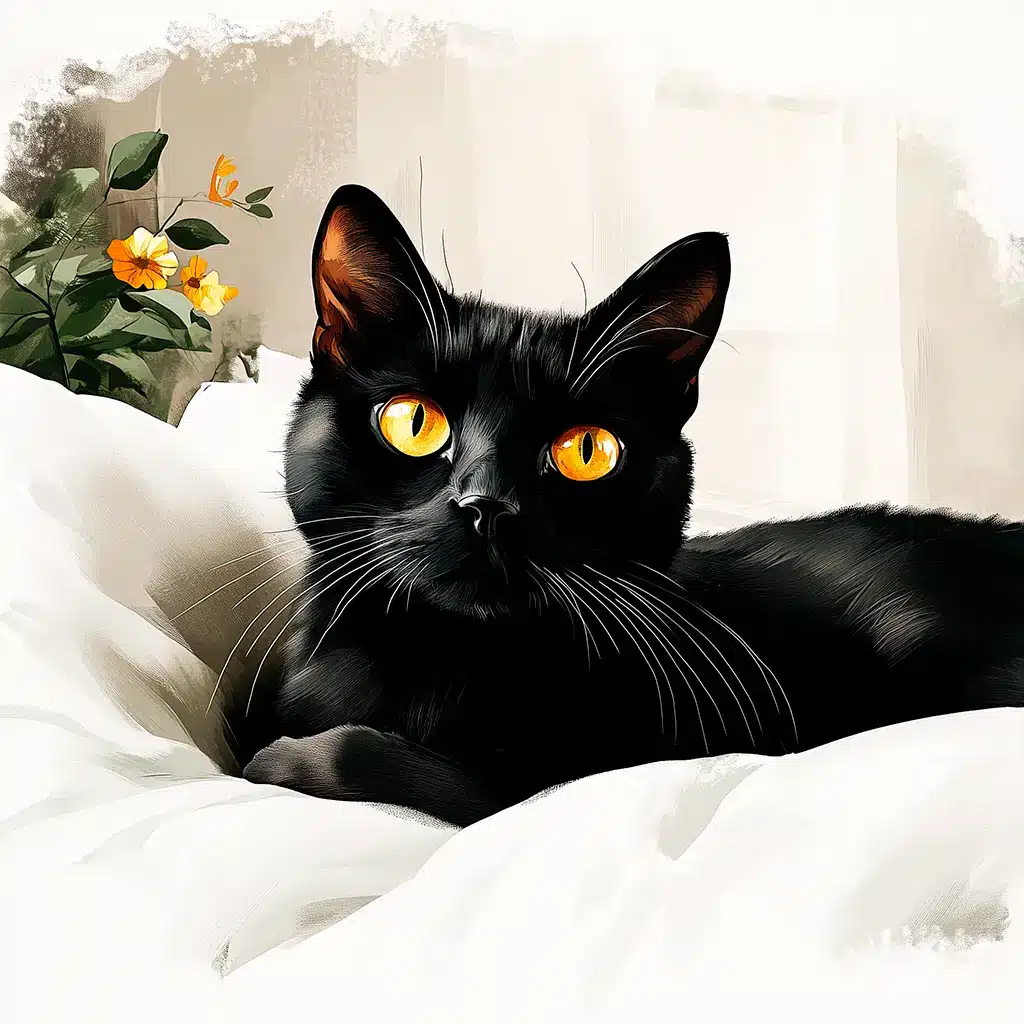
The Cat
Juan Carlos Onetti
(Full story)
Many unpleasant things can be said or imagined about John. But I never suspected him of lying; he had too much disdain for others to invent a fable that would put him in a favorable light.
So when he cheerfully told me the story over dry martinis – for my sake, above all – of one of his failed weddings, I didn’t doubt it. It felt, or was, like watching and listening to a movie without any chance of starting over or any concern about its believability. Nor was there any room left over for a smile.
I had arrived a week earlier from Paris and was hoping to update, confirm, and dispose of the rumors that had reached me about friends, whom we more or less shared, during my absence.
John was a gregarious Englishman, and he knew how to mock everything with detachment, sometimes pity, never malevolence.
We drank and there was a long silence; John seemed to be undecided as he mulled something over, his brow furrowed.
He placed his glass on the table and, with his legs still crossed and his demeanor still resolute, he said:
“She was French and you know her. Maybe you already heard, because we were practically married. All we needed was the priest, the judge, and the delivery of expensive antique furniture that she hadn’t wanted to get rid of. Great-grandparents and grandparents and parents, almost the entire history of France. She, Marie, was all I cared about. You can search through all the Maries you can remember. I was madly in love, and sometimes I thought that it was sexual madness. All I had to do was see her, smell a handkerchief she left lying around, enter the bathroom after she’d been there, that’s all I had to do. We saw each other every week, here or in Paris. Two or three days at a time. We came and went. And each time my desire increased, and I gave into it, wallowed in it; I wanted more and more. And every more was like a stair that pushed me to climb down another, always descending, because I knew I was doing damage to my health and to my mind.”
Without turning away from me, he gestured to Jeeves and two glasses arrived: a dry martini for him and a gin and tonic for me. He lit his pipe (he knew very well that smoking would speed up my death) and sat thinking for a while, almost smiling, with lips that did not sweeten his cheer. As always happens with these kinds of stories, I remained silent, waiting; I was rewarded. Without looking at me, Johnny said:
“I named the cat Edgar. And not because it was a black cat with white symbols of horror on its chest.”
“It happened one night when Marie, as planned, arrived at the airport. I went to pick her up, we had cocktails, happy as usual. We toasted to our marital happiness. This isn’t funny, but it is comical. We went to eat dinner and then to my apartment. I haven’t told you, because I wasn’t sure of it, and maybe I don’t care, that the concierge and part-landlady had a crush on me, or she simply hated me unstintingly. Something like that.
“We entered and turned on the light. She’d never been there. She looked around with a smile that showed approval before it even emerged. And she saw, we saw, in the middle of that large bed with a virginal white bedcover, a large, fat, black cat. A cat that I was seeing for the first time and that seemed used to purring right in that spot. With its feet curled up under its chest, it looked at us with curious eyes, then closed them. To this day, I don’t know how it got in. I have my suspicions. I stepped forward to caress its back and throat, and she exploded, saying that I should throw out that filthy cat, that it was going to fill the bed with fleas. Shouting and stamping her feet on the floor. I lit a cigarette and opened the door. I told her that it had made me happy to unexpectedly find somebody welcoming us. She called me stupid and clapped her hands until the cat ran to the front door and out into the darkness of the hallway. Well, let’s have another drink, that’ll do as a preamble. What happened next is simple and laborious for me to explain. At that moment I decided that I could never marry that woman, that it would impossible for me to live with her, be happy with her. I didn’t tell her at that moment, and we spent the rest of the night, until the exhaustion of the dawn, as we expected and desired.”
He gulped down his drink, relit his pipe, and smiled happily and defiantly. Then he turned to look me in the eyes and said: “Which explains, for any intelligent man, why I’ve only had affairs since then, and I’ve made sure they never last very long.”
THE END
1980