The Stories of Jorge Luis Borges
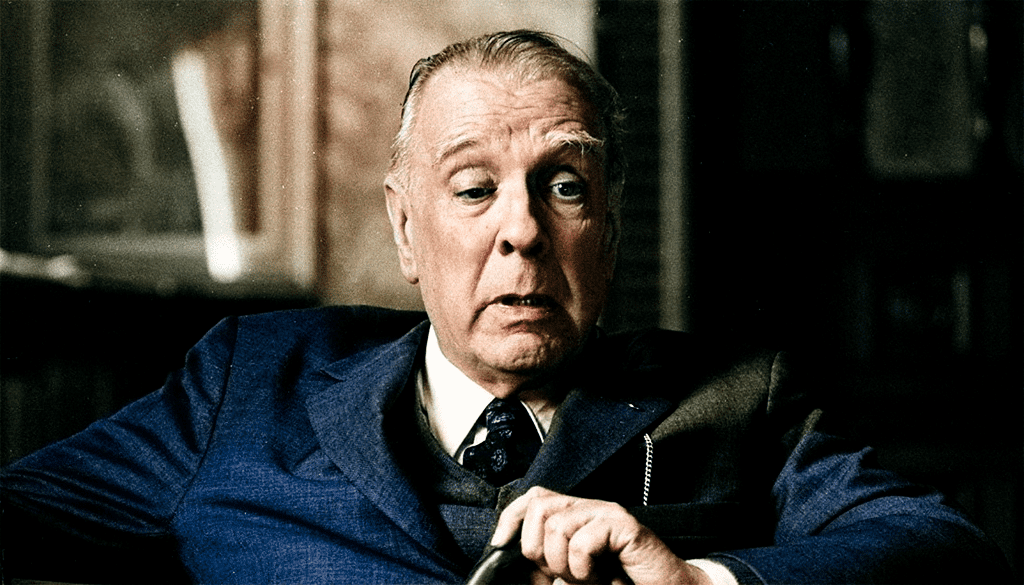
Descubre los mejores cuentos de Jorge Luis Borges, autor de relatos clásicos de la literatura Latinoamericana. Lee sus cuentos completos en línea o imprímelos en PDF.
Descubre los mejores cuentos de Jorge Luis Borges, autor de relatos clásicos de la literatura Latinoamericana. Lee sus cuentos completos en línea o imprímelos en PDF.

“Funes, His Memory” (Funes el memorioso) is a short story by Jorge Luis Borges, first published in June 1942 in the newspaper La Nación, and later included in the book Ficciones (1944). It recounts the story of Ireneo Funes, a young man who, after an accident, acquires a prodigious memory: he can recall every detail of his life and surroundings with absolute precision. The narrator, an alter ego of Borges, reflects on the implications of this ability. Far from turning Funes into a sage, his perfect memory renders him incapable of abstraction or generalization, trapping him in a world of overwhelming details. Borges thus offers a profound meditation on the limits of knowledge and memory, suggesting that forgetting, to a certain extent, is necessary in order to think and to live.

“A Weary Man’s Utopia” (Utopía de un hombre que está cansado), a short story by Jorge Luis Borges published in 1975 in the collection The Book of Sand, is a lyrical tale with deep philosophical roots that recounts the encounter between a twentieth-century man and an inhabitant of the future. The protagonist, Eudoro Acevedo, arrives at a house where he is received by a tall man dressed in gray. During their conversation in Latin, the host reveals an apparently utopian world, without governments, cities, or material possessions. Humanity has abolished the printing press, and each individual creates his own science and art. The inhabitants live in solitude and exercise complete control over their own life and death.

“The Other Heaven” (El otro cielo) is a short story by Julio Cortázar, published in 1966 in the collection All Fires the Fire (Todos los fuegos el fuego). It tells the story of a man divided between his routine life in 1940s Buenos Aires and an imaginary, twilight Paris made of covered passages and gaslight. While he fulfills the obligations of the present (work, family, stability), Josiane awaits him in that other world—an enigmatic woman with whom he shares a freer, more secret existence, whose intensity threatens to eclipse everything that binds him to his real life.

“The Other Heaven,” a short story by Julio Cortázar, tells the life of a man divided between his reality in 1940s Buenos Aires and a fantastic world set in late-nineteenth-century Paris. While in Buenos Aires he leads a routine life as a stockbroker, trapped in a conventional relationship with his fiancée Irma, in his imagination he travels to a bohemian and decadent Paris where he maintains an affair with Josiane, a prostitute, under the constant threat of a murderer named Laurent. Through this contrast between the real and the imaginary, the protagonist seeks to escape monotony but discovers that both worlds are filled with frustration and danger.
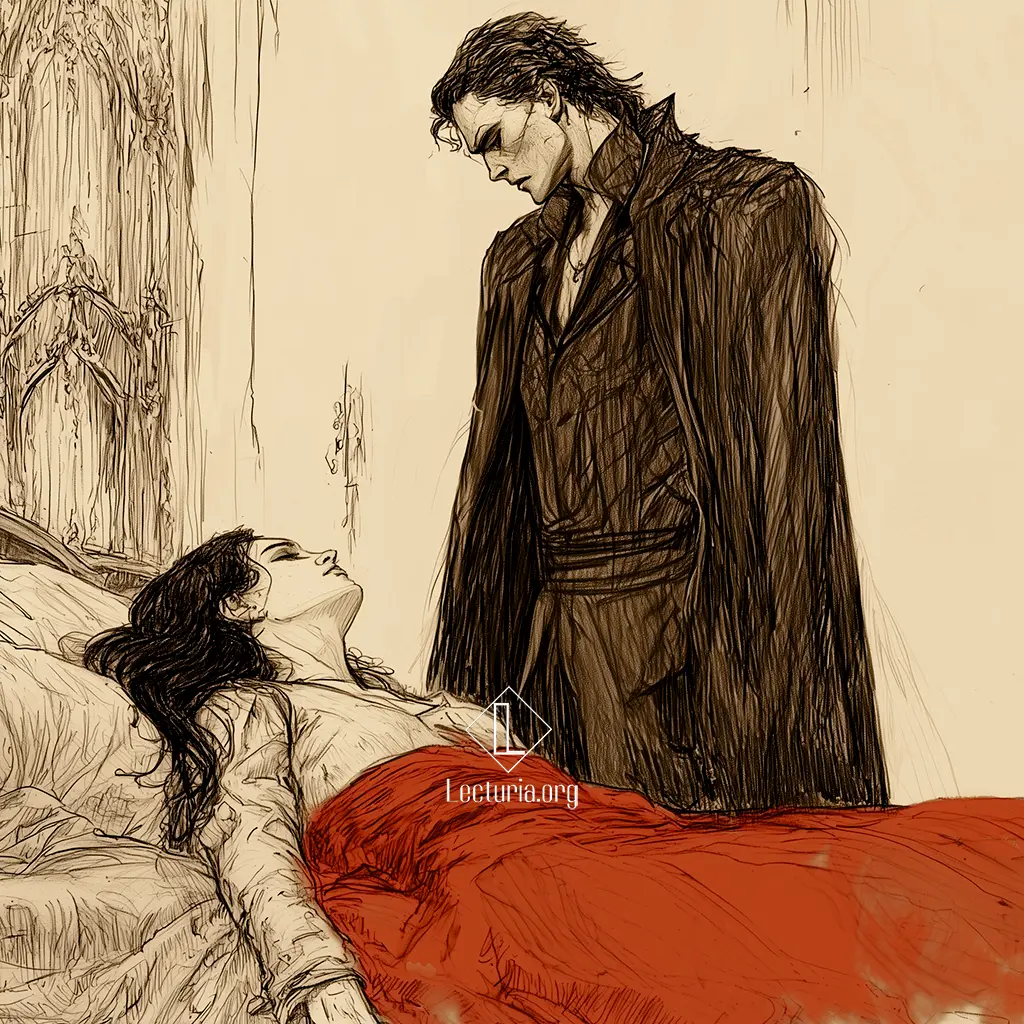
One night, the vampire Duggu Van rises from his grave and enters the castle where Lady Vanda sleeps. Attracted by her beauty, he falls in love with her instead of feeding on her, and he possesses her. Shortly after, Lady Vanda becomes ill and discovers that she is pregnant. Confined within the castle, she is cared for by the nurse Miss Wilkinson, while her body steadily weakens. The doctors find no explanation. The child she carries grows in an abnormal way, absorbing her blood and transforming her. On the night of the birth, Lady Vanda’s body changes completely: her skin darkens, her sex transforms, and from her emerges a male being—the son of Duggu Van. At midnight, Duggu Van arrives, takes the hands of his son, and together they leave through the window, leaving behind the doctors and the nurse, unable to comprehend what has just happened.