Jorge Luis Borges: The House of Asterion. Summary and analysis

Jorge Luis Borges: The House of Asterion. Summary and analysis

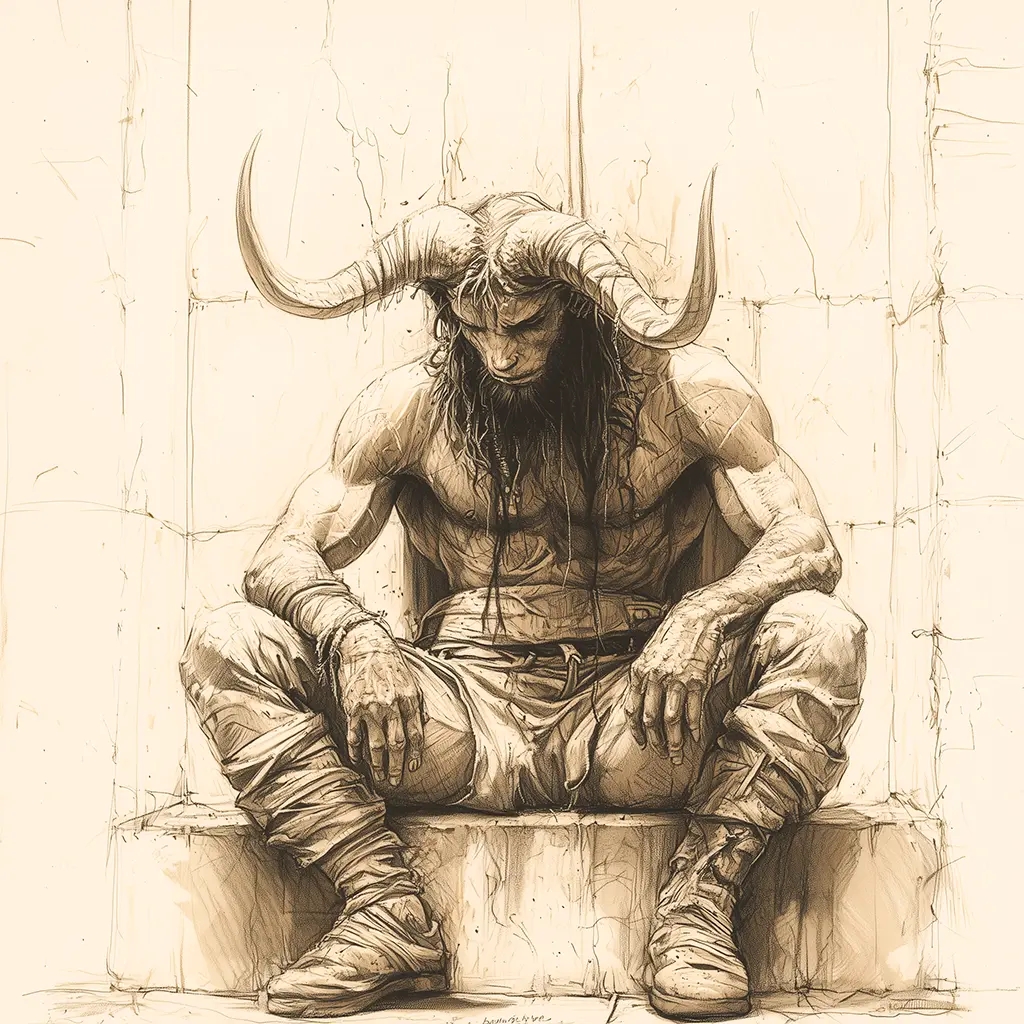
The House of Asterion is a short story by Jorge Luis Borges, published in 1947 in Los Anales de Buenos Aires and later included in El Aleph (1949). It narrates the life of Asterion, a solitary being who inhabits an immense and labyrinthine house. From his perspective, he defends his isolation and describes his games, thoughts, and the strange architecture of his home, where each corridor seems to repeat itself endlessly. Despite his apparent freedom, Asterion longs for the arrival of a redeemer to end his solitude without fully understanding the meaning of his destiny.

Jorge Luis Borges: The House of Asterion

Jorge Luis Borges: The House of Asterion

The House of Asterion, a short story by Jorge Luis Borges, published in 1947 in Los Anales de Buenos Aires and later included in the collection El Aleph (1949), explores the life of Asterion, a mythical and enigmatic character who lives in a unique, vast and labyrinthine house. Through a first-person narrative, Asterion describes his solitary existence in this mysterious house, where he entertains himself with various games and reflections while awaiting the arrival of the promised Redeemer.

Julio Cortázar: House Taken Over

Julio Cortázar: House Taken Over

In “House Taken Over” by Julio Cortázar, Irene and her brother live in an old, spacious house inherited from their ancestors. The house, full of family memories, is meticulously cared for by both, who lead a routine and quiet life. Irene spends her days knitting while her brother takes care of the housework. One day, strange noises begin to be heard from the farthest part of the house, forcing the siblings to leave certain rooms. The sounds intensify, and the siblings are forced to confine themselves to a smaller section of the house, living in a state of growing unease.

Jorge Luis Borges: The Book of Sand

Jorge Luis Borges: The Book of Sand

The Book of Sand (El libro de arena), a story by Jorge Luis Borges published in 1975, tells the story of a man who, in exchange for a valuable Bible and money, acquires a mysterious book of unknown origin and strange characters that seem to have infinite content. As the man tries to understand the nature of the book, he becomes obsessed and isolates himself, which will seriously affect his life.

Jorge Luis Borges: Death and the Compass. Summary and analysis

Jorge Luis Borges: Death and the Compass. Summary and analysis

Death and the Compass, written by Jorge Luis Borges in 1942, is a detective story loaded with symbolism. Detective Erik Lönnrot investigates a series of murders connected by a cabalistic pattern. His obsession with logic leads him to interpret a series of clues in search of a solution to the mystery. As he deciphers the deaths, the reader is plunged into a labyrinth of mystical and mysterious concepts. With wit and a unique structure, Borges reflects on logic, chance, and the limits of human knowledge.

Jorge Luis Borges: Death and the Compass

Jorge Luis Borges: Death and the Compass

“Death and the Compass” is a short story by Jorge Luis Borges, first published in May 1942 in the magazine Sur and later included in the collection Ficciones (1944). Dr. Marcelo Yarmolinsky, a delegate to the Third Talmudic Congress, is found dead in his room at the Hôtel du Nord. At the crime scene, a mysterious message is discovered, linked to the first letter of the Name of God. Convinced that behind this death—and those that follow—there lies a mystical and symbolic pattern, the detective Erik Lönnrot ventures into a sinuous labyrinth of clues, determined to uncover who, or who all, is responsible for these murders.