Edgar Allan Poe: The Facts in the Case of M. Valdemar. Summary and analysis

Edgar Allan Poe: The Facts in the Case of M. Valdemar. Summary and analysis

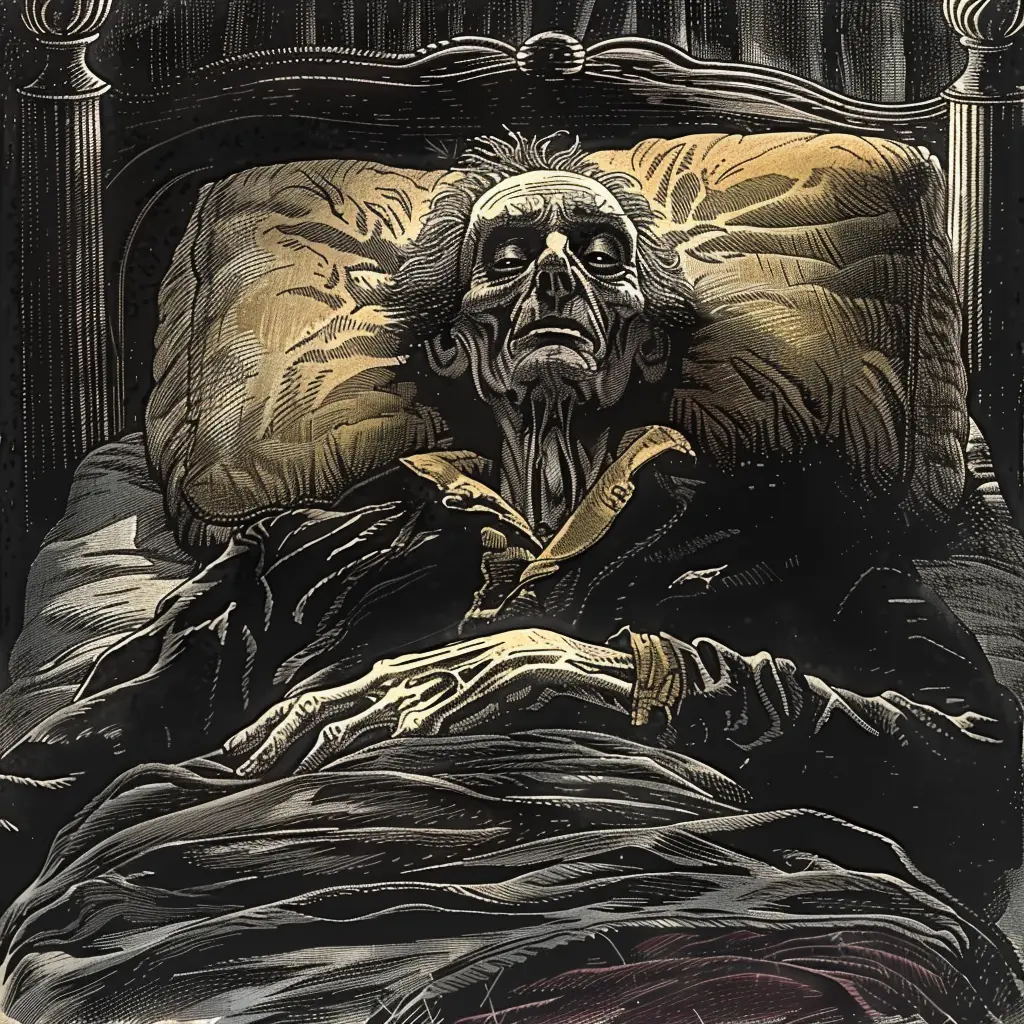
“The Facts in the Case of M. Valdemar” by Edgar Allan Poe narrates a disturbing scientific experiment. A hypnotist, fascinated by the boundaries between life and death, decides to try to hypnotize a person at the moment of their death. To do this, he recruits Ernest Valdemar, a terminally ill man. With the help of doctors and assistants, the narrator undertakes this audacious experiment, exploring unknown territories of the human consciousness. As the process advances, the participants face inexplicable phenomena that challenge their understanding of reality and death. The story combines elements of psychological horror with a pseudo-scientific approach, creating an atmosphere of growing tension and mystery that keeps the reader in suspense until its surprising conclusion.

Edgar Allan Poe: The Masque of the Red Death. Summary and analysis

Edgar Allan Poe: The Masque of the Red Death. Summary and analysis

The Masque of the Red Death, written by Edgar Allan Poe and published in 1842, is a story that combines horror and fantasy to explore the inevitability of death. In a kingdom devastated by a lethal plague, Prince Prospero takes refuge with a group of nobles in his fortified abbey. He organizes a luxurious masked ball to escape the horror outside. Amid the opulent festivities, a mysterious figure appears among the guests, sowing fear and uncertainty.

Edgar Allan Poe: The Masque of the Red Death

Edgar Allan Poe: The Masque of the Red Death

The Masque of the Red Death, a short story by Edgar Allan Poe published in 1842, immerses the reader in an allegory about the inevitability of death. Set in an indeterminate time plagued by a devastating plague known as the Red Death, the kingdom’s prince decides to isolate himself in his fortified abbey along with other nobles, seeking to escape the disease. He organizes a luxurious masked ball in his refuge, ignoring the suffering ravaging the outside world. However, some guests do show up, even if they are not called.

Edgar Allan Poe: The Premature Burial. Summary and Analysis

Edgar Allan Poe: The Premature Burial. Summary and Analysis.

“The Premature Burial”, written by Edgar Allan Poe and published in 1844, explores one of humanity’s deepest fears: the fear of being buried alive. Through a narrator obsessed with this fate, the story immerses us in an atmosphere of anguish and paranoia and reflects on the thin line that separates life from death. The story combines chilling accounts of confirmed cases with the experiences of the protagonist, who lives in constant panic due to an illness.

Edgar Allan Poe: The Premature Burial

Edgar Allan Poe: The Premature Burial

The Premature Burial is a story by Edgar Allan Poe, published on July 31, 1844, in the Dollar Newspaper, in which he reflects on the terror provoked by the idea of being buried alive. In a somber and captivating style, the protagonist describes a series of cases of people who have suffered this terrible experience while relating his own experiences and the methods he employs to avoid such a tragedy. With a style halfway between fiction and journalistic account, Poe addresses one of the oldest atavistic fears while immersing the reader in an atmosphere of macabre fascination.

Edgar Allan Poe: Eleonora

Edgar Allan Poe - Eleonora

Eleonora is a gothic tale by Edgar Allan Poe, published in 1841. It tells the story of a young man who lives in a paradisiacal valley with his cousin Eleonora. In this haven of beauty and isolation, the two share an existence of pure love and simple harmony, surrounded by dreamy landscapes and the silent flow of a magical river. However, a shadow threatens to break their idyllic life, forcing them to confront the fragility of happiness and the strength of the ties that bind them together.