Harlan Ellison: “Repent, Harlequin!” Said the Ticktockman

Harlan Ellison: "Repent, Harlequin!" Said the Ticktockman

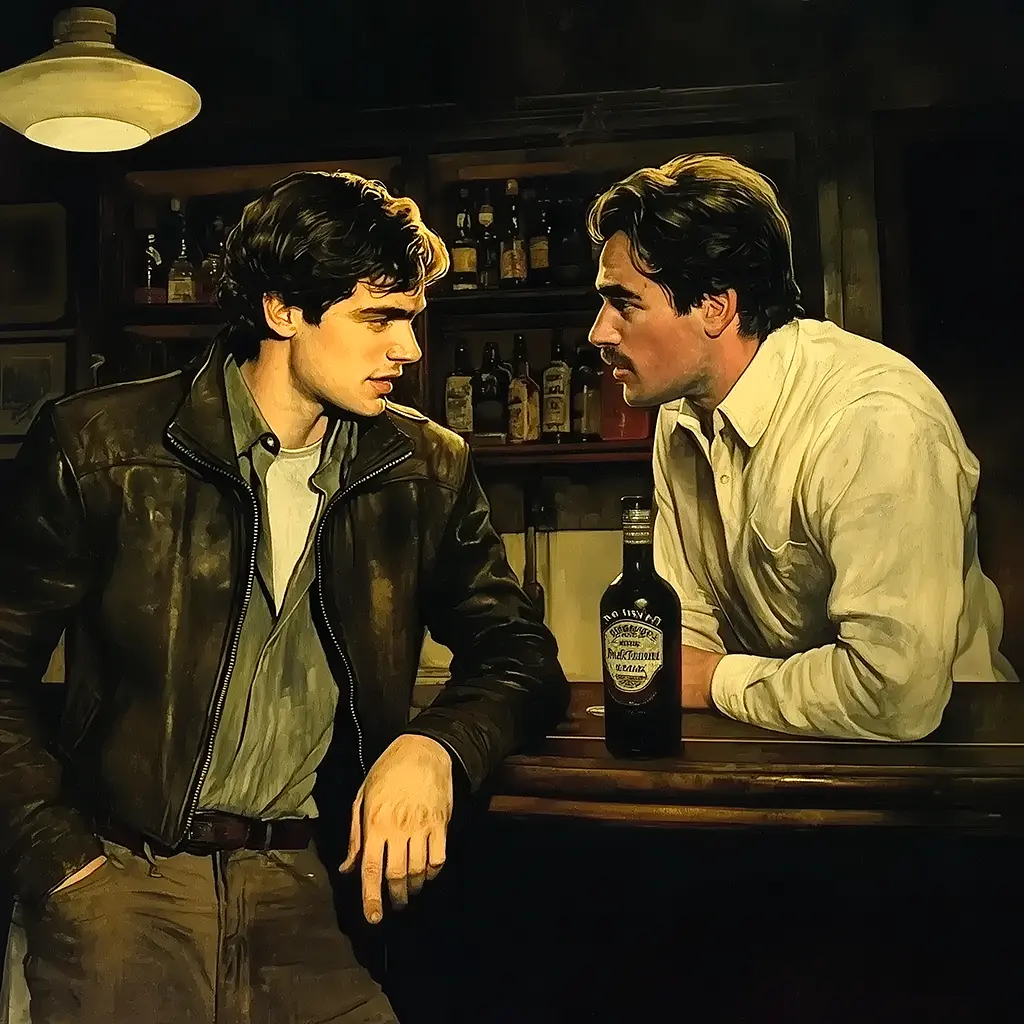
“Repent, Harlequin!” Said the Ticktockman is a short story by Harlan Ellison, published in December 1965 in Galaxy Magazine, and winner of the Hugo and Nebula awards in 1966. Set in a society obsessed with punctuality and the control of time, the story follows the Harlequin, an eccentric rebel who challenges the rigid system imposed by the Time Keeper, also known as Mr. Tick-Tock. Through his jokes and chaotic acts, the Harlequin upsets the established order and defies the rules of a world where tardiness is severely punished. The narrative combines humor and social criticism and explores the consequences of disobedience in a totalitarian system.

Isaac Asimov: The Ultimate Crime

Isaac Asimov: The Ultimate Crime

The Ultimate Crime (1976) is a story by Isaac Asimov that is part of More Tales of the Black Widowers. The story takes place during one of the monthly dinners of the exclusive Black Widowers Club, where the conversation revolves around Sherlock Holmes and his nemesis, Professor Moriarty. A guest, a member of the Baker Street Irregulars, poses an intriguing literary conundrum related to Moriarty’s fictional treatise entitled The Dynamics of an Asteroid. The evening becomes a brilliant exchange of ideas where club members explore theories connecting science, literature, and the criminal mind, revealing the group’s fascinating collective ingenuity.

Ray Bradbury: A Sound of Thunder

Ray Bradbury: A Sound of Thunder

“A Sound of Thunder” is a short story by Ray Bradbury, first published on June 28, 1952, in Collier’s magazine, and later included in the collection The Golden Apples of the Sun (1953). In a future where time travel is possible, a company organizes safaris to the past. Eckels, an eager customer, pays a considerable sum to join an expedition that will take him millions of years back in time to hunt a Tyrannosaurus rex. Before departure, he is sternly warned: he must follow the instructions to the letter; even the slightest mistake could have irreversible consequences.

Isaac Asimov: Dreaming Is a Private Thing

Isaac Asimov: Dreaming Is a Private Thing

“Dreaming Is a Private Thing” is a science fiction story by Isaac Asimov, published in The Magazine of Fantasy and Science Fiction in December 1955. In a future where dreams have become the ultimate form of entertainment thanks to technology that allows them to be recorded and replayed, a small group of people with extraordinary imaginations create dream experiences that the rest of humanity can enjoy. In this context, Jesse Weill, director of Dreams Inc., is dedicated to finding new talent to feed this lucrative market. One day, a recruiter introduces him to Tommy Slutsky, a ten-year-old boy with promising abilities.

Philip K. Dick: The Father-Thing

Philip K. Dick: The Father-Thing

The Father-Thing is a disturbing science fiction short story by Philip K. Dick published in December 1954 in The Magazine of Fantasy and Science Fiction. An eight-year-old, Charles, begins to suspect something terrible is happening to his father. One night, as he enters the garage, he witnesses a disturbing scene: next to his father is an identical replica of him. During dinner, Charles is confronted by the disturbing creature that, he is convinced, has usurped his father’s place. His mother’s incomprehension and the escalation of events that this provokes lead Charles to run away from home in search of help, triggering a desperate struggle to discover the truth in an environment that becomes increasingly oppressive and terrifying.

Isaac Asimov: Christmas Without Rodney. Summary and analysis

Isaac Asimov - Christmas Without Rodney. Summary and analysis

In Isaac Asimov’s Christmas Without Rodney, Howard and his wife Gracie face holiday chaos when Gracie gives their faithful household robot, Rodney, a holiday during the family’s Christmas visit. Their son, DeLancey, his haughty wife, Hortense, and their spoiled child, LeRoy, bring their ultra-modern robot, Rambo, whose sleek design proves useless in the couple’s old-fashioned home. Blending humor, family conflict, and subtle exploration of robotics, the story raises profound questions about human relationships, technology, and the limits of artificial intelligence.