Jorge Luis Borges: The Aleph

Jorge Luis Borges: The Aleph

“The Aleph” (El Aleph) is one of the most iconic short stories by Jorge Luis Borges, originally published in 1945 in the magazine Sur and later included in the 1949 collection of the same name. In this work, Borges explores the intersection between the infinite and the everyday. The story follows a protagonist obsessed with the memory of his beloved Beatriz Viterbo, who regularly visits the house where she once lived. There, he encounters her cousin, Carlos Argentino Daneri, a mediocre poet and library clerk. During one of these meetings, Daneri reveals the existence of an astonishing object: an “Aleph,” a point in space that contains all the points in the universe.

Mariana Enríquez: An Invocation of the Big-Eared Runt

Mariana Enríquez: An Invocation of the Big-Eared Runt

“An Invocation of the Big-Eared Runt” (Pablito clavó un clavito: Una evocación del Petiso Orejudo) is an unsettling short story by Mariana Enríquez, published in the collection Las cosas que perdimos en el fuego (2016). The story centers on Pablo, a guide of macabre tours in Buenos Aires, who begins to see the specter of the Petiso Orejudo, an infamous murderer from the early twentieth century. The criminal’s supernatural apparition becomes a disturbing reflection of the protagonist’s personal and familial crisis. Enríquez intertwines historical horror with psychological terror, creating a dense and chilling atmosphere that explores obsession, guilt, and the loss of human connection.

Bram Stoker: The Dualitists, or, the Death Doom of the Double Born

Bram Stoker: The Dualitists, or, the Death Doom of the Double Born

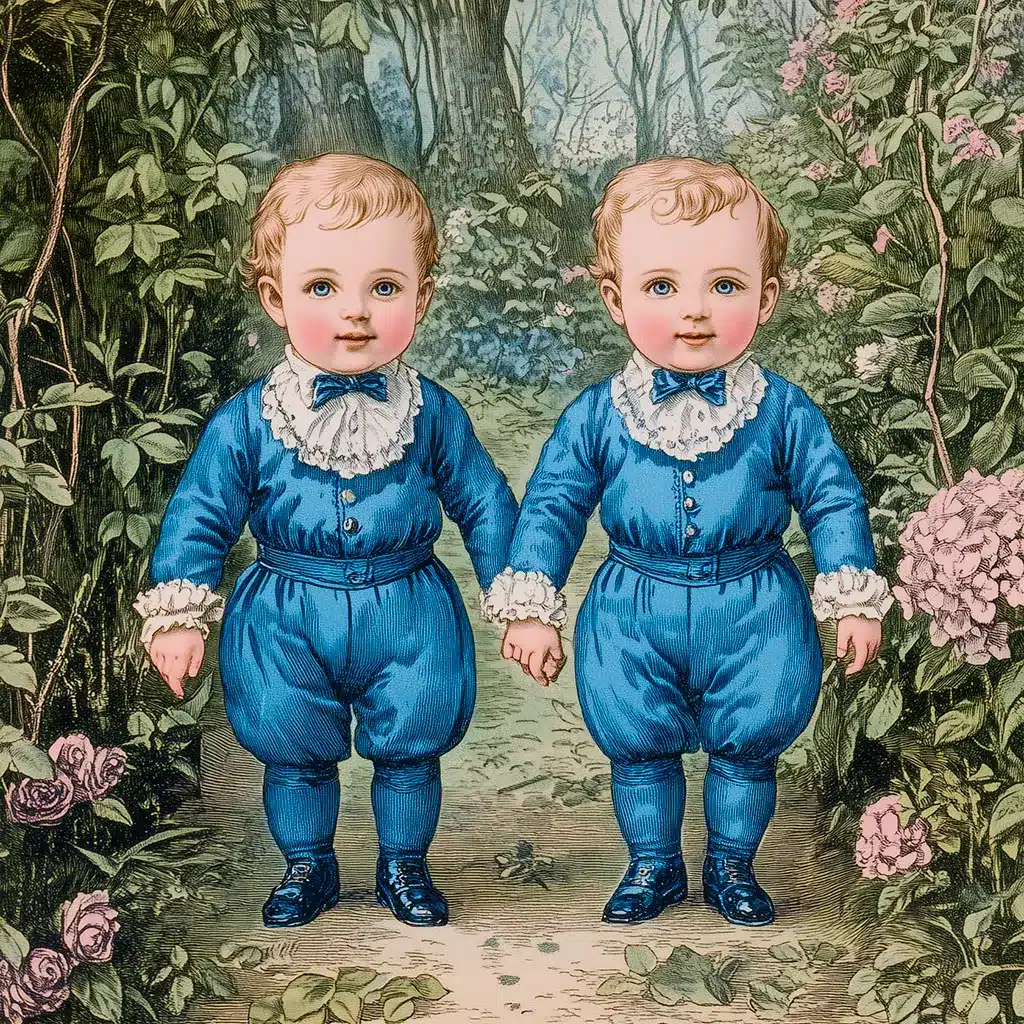
“The Dualitists, or, the Death Doom of the Double Born” is a horror short story laced with dark humor written by Bram Stoker, published in November 1886 in The Theatre Annual for 1887. The story follows Harry and Tommy, two inseparable boys whose pranks grow increasingly macabre, leading them to discover an unsettling fascination with cruelty and destruction. What begins as innocent play gradually transforms into a spiral of boundless violence. Set in an apparently quiet neighborhood, the narrative—rich in suspense and horror—reveals the darkness that can lurk behind childhood innocence.

Charlotte Brontë: Napoleon and the Spectre

Charlotte Brontë: Napoleon and the Spectre

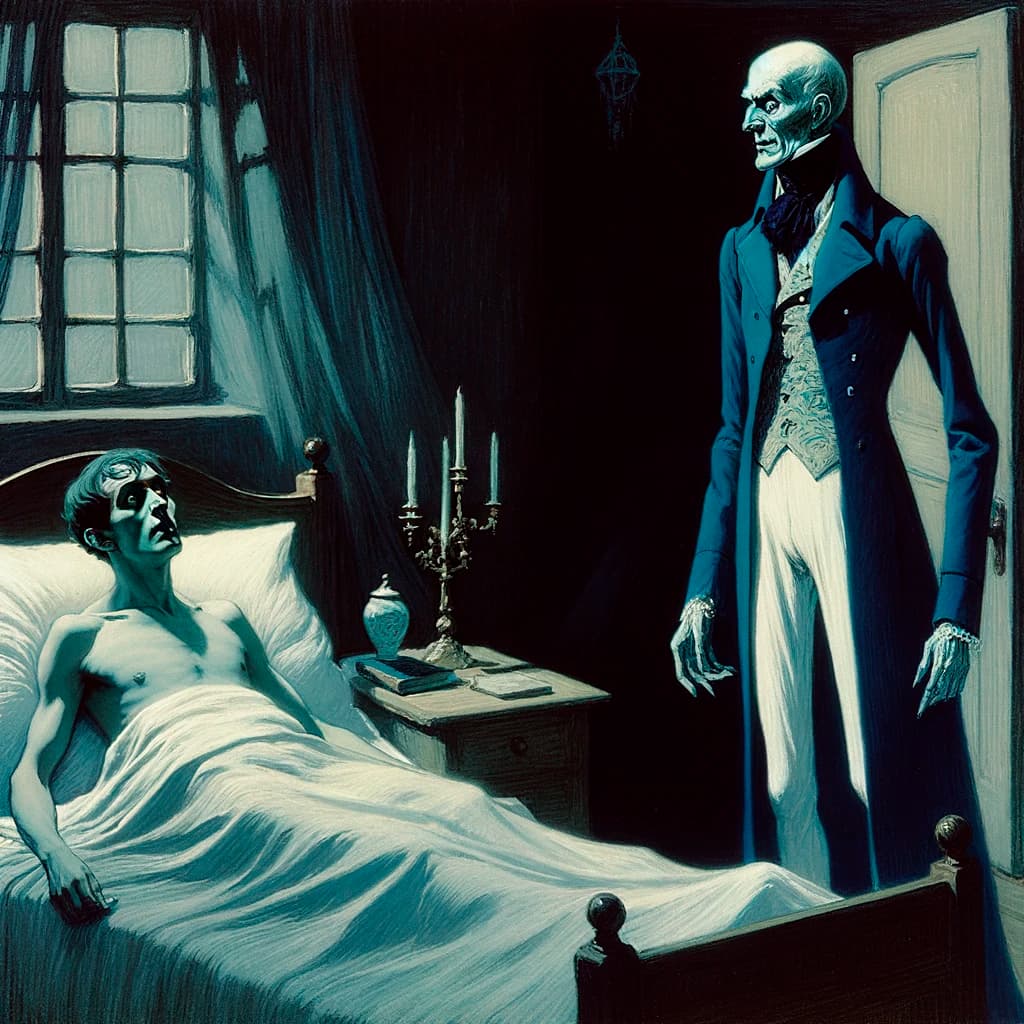
“Napoleon and the Spectre” is a Gothic tale by Charlotte Brontë, written in 1833 and published in 1925 in the collection The Twelve Adventurers and Other Stories. Emperor Napoleon is in his bedroom attempting to rest when a series of strange occurrences begin to manifest themselves: creaking sounds, moans, and a shadow that darkens the candles. As he tries to convince himself that everything is merely an illusion, a mysterious voice addresses him and a sinister-looking spectre appears before him, urging him to leave his bed. Driven by an irresistible force, Napoleon follows it into the night of Paris, where a disturbing experience awaits him.

Jean Paul Sartre: Erostratus

Jean Paul Sartre: Erostratus

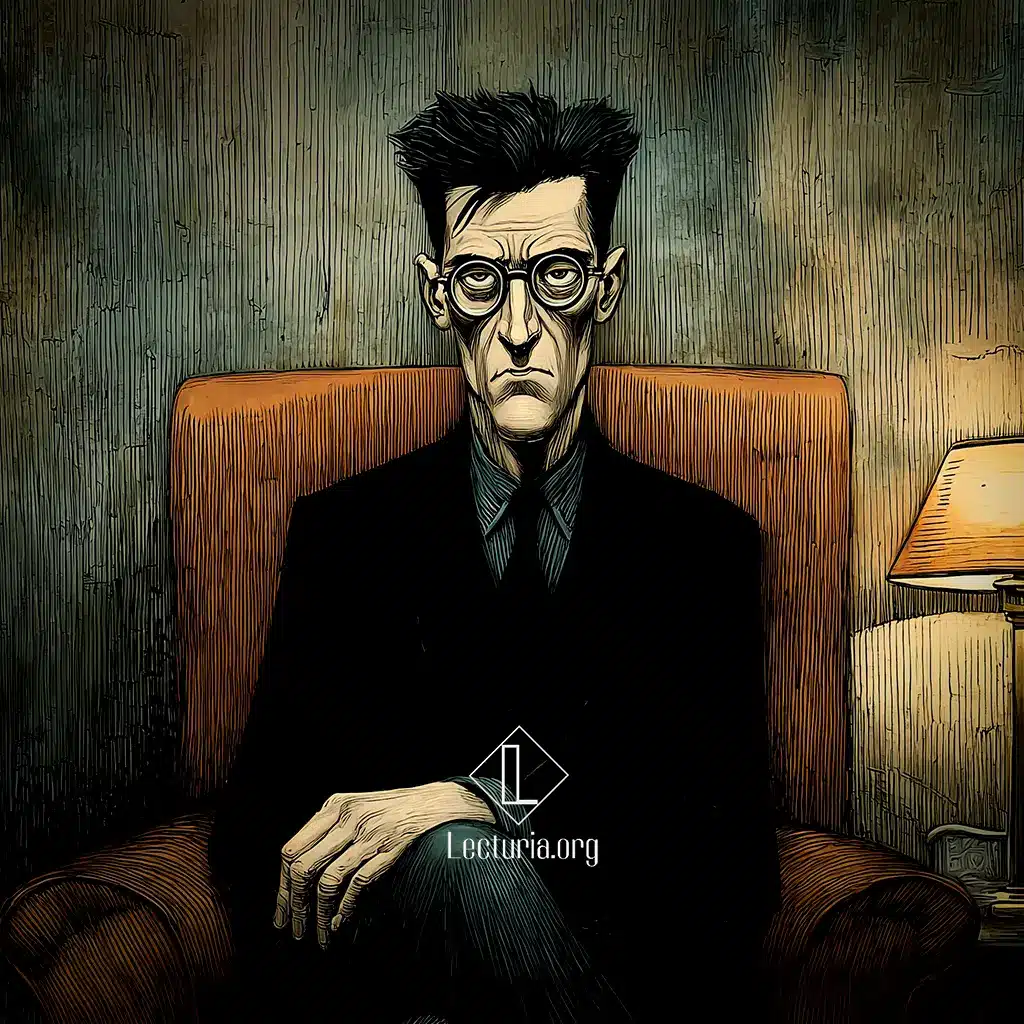
“Erostratus” (Érostrate) is a short story by Jean-Paul Sartre, published in 1939 in the book Le Mur. It tells the story of a solitary and resentful man who observes humanity with a mixture of superiority and revulsion. Obsessed with the pursuit of infamous glory and inspired by the figure of Erostratus—who in antiquity set fire to the Temple of Artemis in Ephesus for the sole purpose of passing into posterity—he acquires a revolver and begins to plan a crime that will grant him the fame he believes he needs in order to transcend his own insignificance.

Bertolt Brecht: The unseemly old lady

Bertolt Brecht: The unseemly old lady

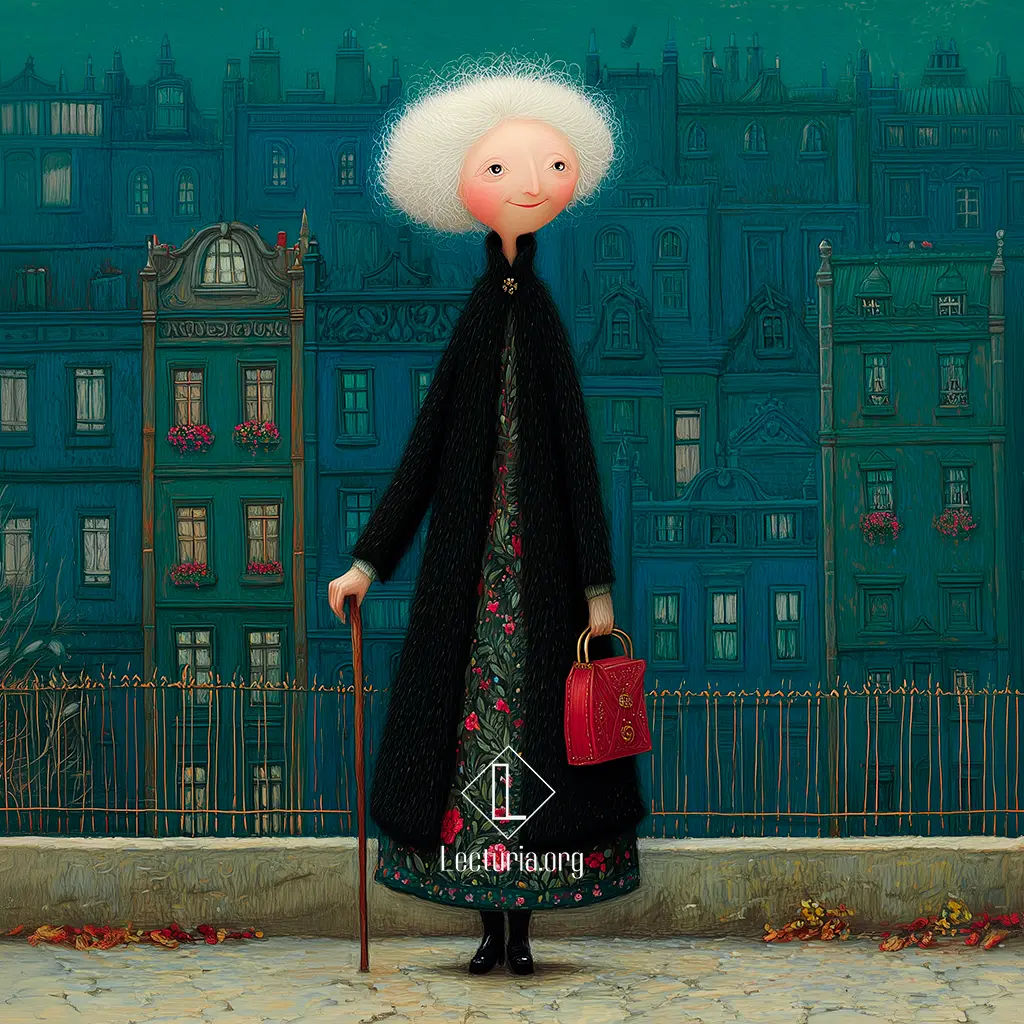
“The Unseemly Old Lady” (Die unwürdige Greisin) is a short story by Bertolt Brecht, written in 1939 and first published in the collection Kalendergeschichten (1949). It recounts the life of a woman who, after her husband’s death, finds herself faced with a dilemma: whether to depend on her children or fend for herself. Against all expectations, she rejects her family’s guardianship and chooses to live alone, accepting only modest financial support. From that moment on, she begins to chart her own course through small acts of independence that bewilder her children and arouse the curiosity of the townspeople.