Damon Knight: Shall the Dust Praise Thee?

Damon Knight: Shall the Dust Praise Thee?

“Shall the Dust Praise Thee?” is a short story by Damon Knight, published in 1967 in the anthology Dangerous Visions. The Day of Wrath has finally arrived: the heavens open, trumpets sound, and the throne of God appears, wreathed in fire, to preside over the Last Judgment. Seven angels descend upon the Earth to carry out their missions on the Final Day; however, something prevents them from doing so. The world is not what they expected to find.

Edgar Allan Poe: The Man of the Crowd

Edgar Allan Poe: The Man of the Crowd

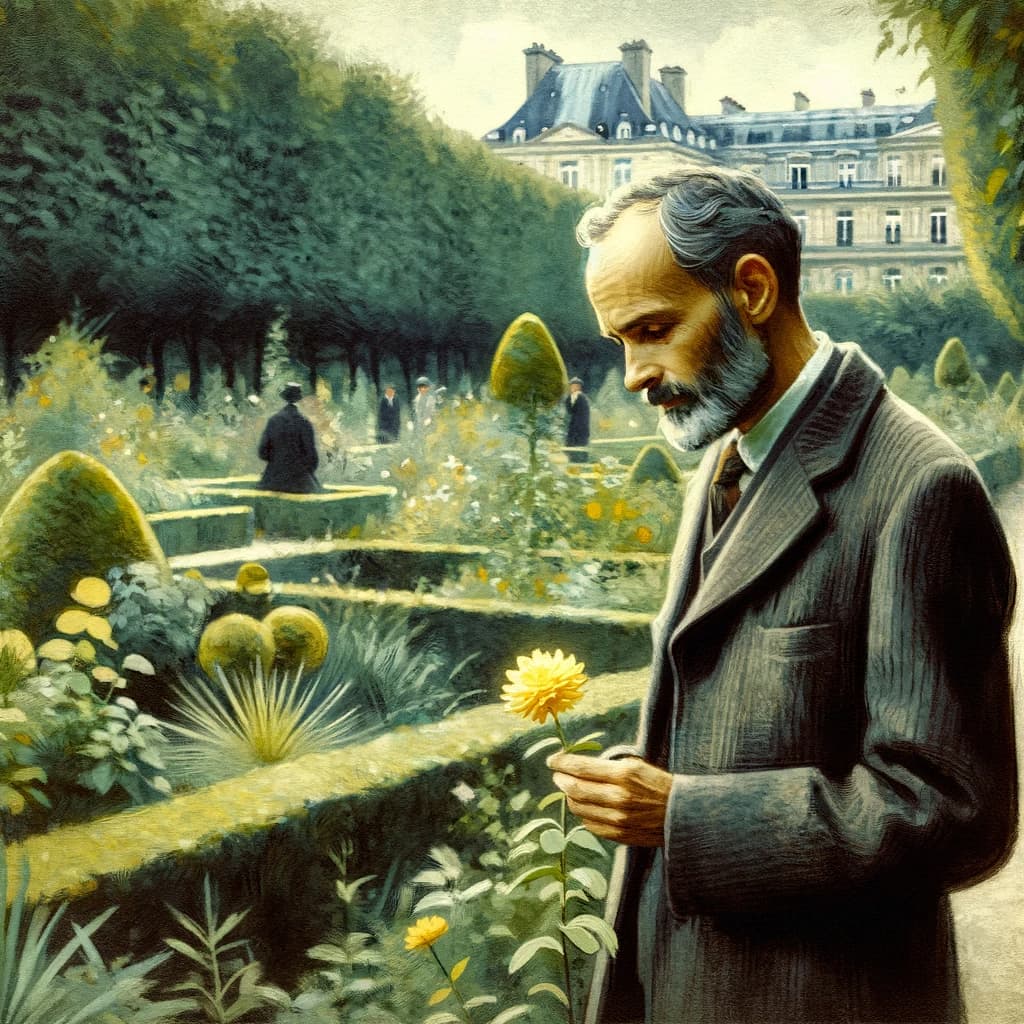
“The Man of the Crowd” is a short story by Edgar Allan Poe, published in December 1840 in Burton’s Gentleman’s Magazine and Atkinson’s Casket. A man observes from the window of a London café the ceaseless flow of people along a bustling avenue. For hours he watches and classifies the passersby according to their appearance and behavior: merchants, clerks, gamblers, beggars, prostitutes. As night falls, his attention is captured by an old man with an extraordinarily enigmatic expression. Driven by an irresistible curiosity, he leaves the café to follow the mysterious figure through the nocturnal streets of London.

Charles Dickens: The Poor Relation’s Story

Charles Dickens: The Poor Relation’s Story

“The Poor Relation’s Story” is a short story by Charles Dickens, published on December 25, 1852, in the magazine Household Words. During a family gathering, Michael—a humble, discreet man—is compelled to begin the round of Christmas tales. In a reflective tone, he opens his narration by setting out the image his family has of him: a failed relative, solitary and penniless, condemned to a drab and routine existence, whose chief enemy is himself. Yet he maintains that behind this appearance, accepted by all, there lies a story very different from the one others believe they know.

Arthur Conan Doyle: The Adventure of the Blue Carbuncle

Arthur Conan Doyle: The Adventure of the Blue Carbuncle

“The Adventure of the Blue Carbuncle” is a short story by Arthur Conan Doyle, published in January 1892 in The Strand Magazine. Two days after Christmas, Dr. Watson finds Sherlock Holmes examining an old hat and a lost goose recovered after a street altercation. What initially seems a trivial incident takes an unexpected turn when a valuable jewel, stolen days earlier, is discovered inside the bird. From this surprising find, Holmes embarks on a meticulous investigation to trace the goose’s journey and determine how an object of such value came to be hidden in so improbable a place.

Gustavo Adolfo Bécquer: The White Doe

Gustavo Adolfo Bécquer: The White Doe

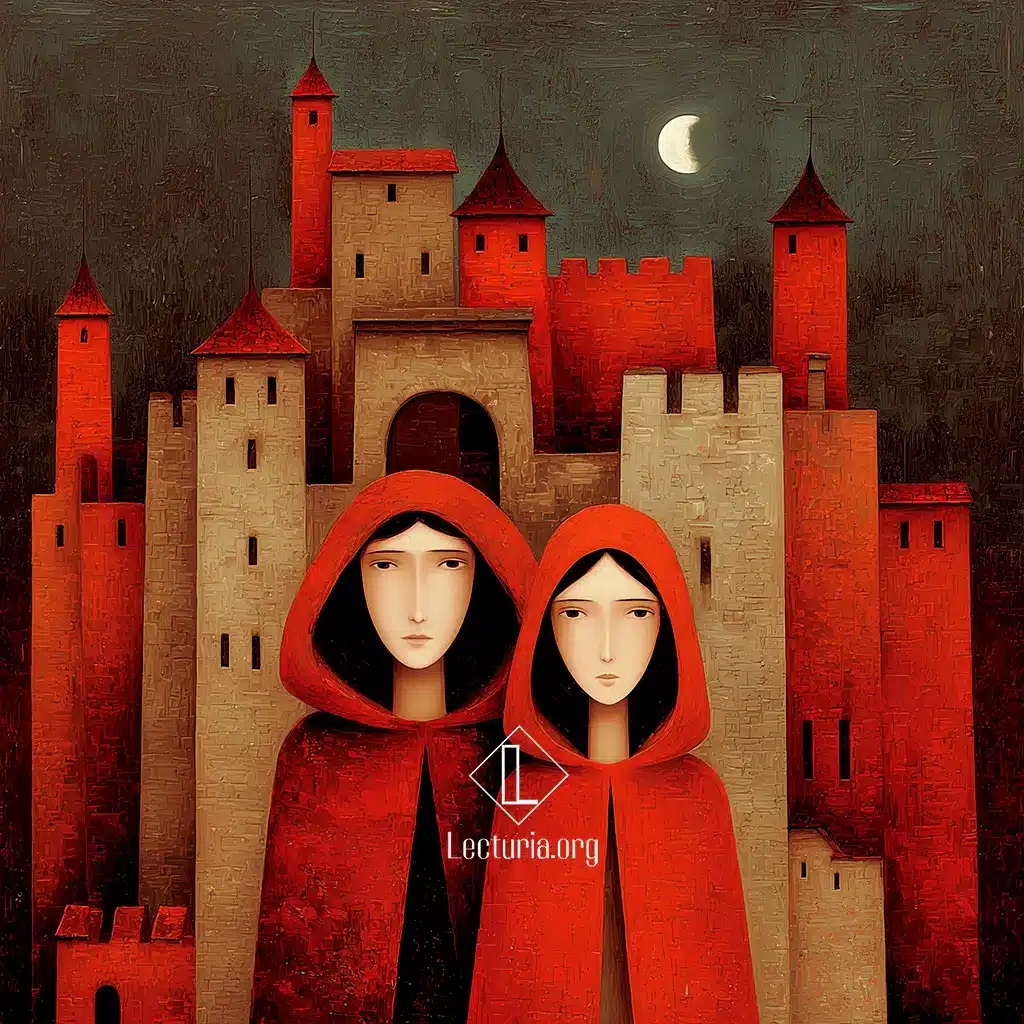
“The White Doe” (La corza blanca) is a short story by Gustavo Adolfo Bécquer, published in June 1863 in La América. The story is set in a small village in Aragon during the Middle Ages. Don Dionís, a retired knight, devotes himself to hunting in the company of his daughter Constanza, renowned for her extraordinary beauty. During one of their expeditions, the hunters encounter Esteban, a shepherd who tells them an unsettling story about the deer of the region and a mysterious white doe. Although the tale is met with skepticism by the hunters, Garcés, a young huntsman, decides to investigate the truth.

Jorge Luis Borges: A Weary Man’s Utopia

Jorge Luis Borges: A Weary Man's Utopia

“A Weary Man’s Utopia” (Utopía de un hombre que está cansado), a short story by Jorge Luis Borges published in 1975 in the collection The Book of Sand, is a lyrical tale with deep philosophical roots that recounts the encounter between a twentieth-century man and an inhabitant of the future. The protagonist, Eudoro Acevedo, arrives at a house where he is received by a tall man dressed in gray. During their conversation in Latin, the host reveals an apparently utopian world, without governments, cities, or material possessions. Humanity has abolished the printing press, and each individual creates his own science and art. The inhabitants live in solitude and exercise complete control over their own life and death.